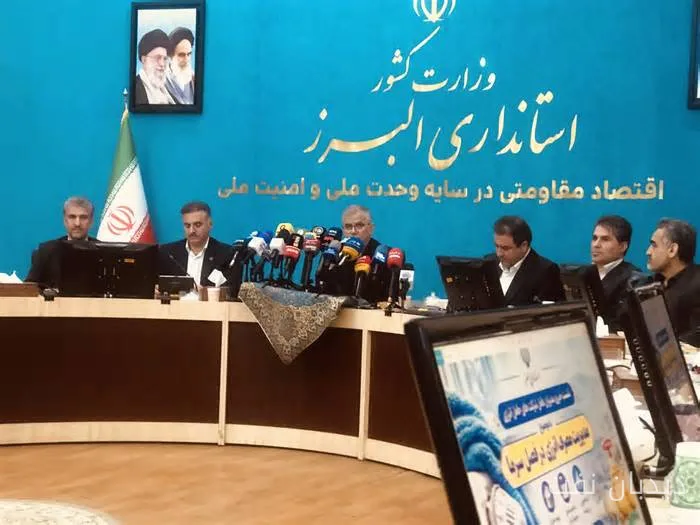
Mojtaba Abdollahi, the Governor of Alborz, explained the energy supply situation for the upcoming months during a joint press conference with the CEOs of energy companies in the province on Thursday. According to him, energy imbalance is no longer just a technical issue, but has become a matter related to lifestyle and consumption patterns in society, and it is essential to reconsider our consumption behaviors.
Energy Imbalance and the Necessity of Consumption Management
Abdollahi pointed to the role of the media in managing the upcoming conditions, adding: "Public awareness is very important, and it is expected that the media, in collaboration with executive agencies, will inform people about the necessity of managing water and energy consumption." He warned of a 50% gas shortage in winter and stated: in winter, about 70 to 80 percent of the country's gas production is allocated to the residential sector, which limits the fuel supply for power plants and industrial units.
Infrastructure Development and Changing Lifestyle
Abdollahi referred to the development of the gas supply network in rural and mountainous areas of Alborz and said: extensive measures have been taken to supply gas to hard-to-reach areas such as Taleqan, Asara, and the Chalus road. He also mentioned the change in heating patterns in rural areas, adding: "In the past, heating of homes was usually limited to one area, but now the entire space of homes is heated, and even in some villas, gas is used to heat outdoor and indoor pools."
The Governor of Alborz emphasized that infrastructure development must be accompanied by a correct consumption culture and added: "Energy resources do not have unlimited capacity, and we cannot expect sustainable supply with the current consumption pattern."
Abdollahi, referring to the water consumption situation in the province, clarified: "The average daily water consumption for each citizen in the country is about 180 liters, while this figure in Alborz province reaches about 198 liters." He emphasized the necessity of developing water recycling and using modern technologies by comparing these statistics with consumption patterns in European countries.
He also addressed the imbalance in liquid fuel and the gap between gasoline production and consumption in the country, stating: "Daily gasoline consumption during peak consumption days reaches about 140 to 150 million liters, while the domestic production capacity under optimal conditions is about 110 million liters per day." Abdollahi also referred to the cost of supplying imported gasoline and stated that this imposes a significant financial burden on the country.
In conclusion, Abdollahi considered changing consumption culture as the most important prerequisite for managing energy imbalance and urged the media to collaborate with the public relations of executive agencies to launch public campaigns for reforming water and gas consumption patterns. He said: "Saving should not be limited to temporary recommendations, but should become part of people's lifestyle."
Read more: Mahras ordered 26 dual-fuel tankers with a capacity of nearly 484,000 TEU · New gasoline rationing plan with 50 liters of new fuel added to cards