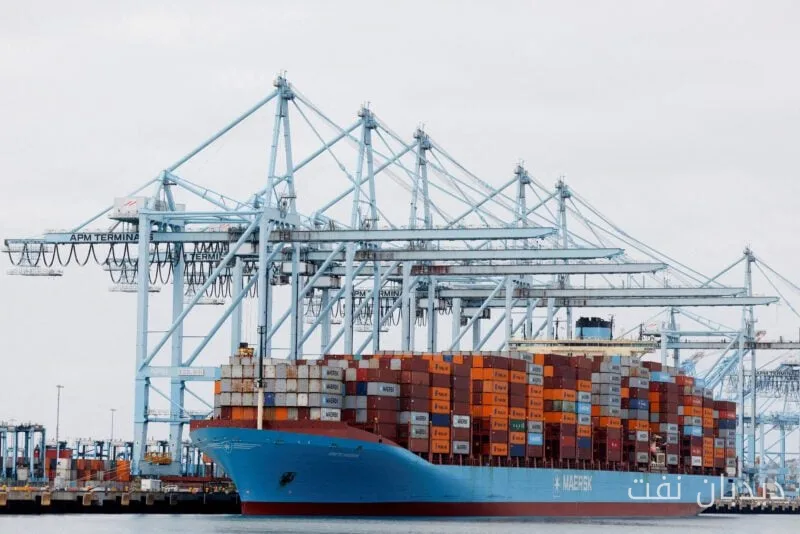
The recorded capacity of the global container fleet has exceeded 15 million TEU (Twenty-foot Equivalent Units) and is expected to increase to 16 million TEU by the end of the year with the arrival of new contracts. The ordering trend in the container industry indicates that companies are still competing to increase their capacity.
New Agreements and Maersk's Return to the Market
Among the most significant anticipated contracts, Maersk's (Maersk) return to the largest segment of the container fleet is noteworthy. Reports indicate that this Danish company is negotiating with Chinese shipbuilding industries to construct twelve dual-fuel LNG ships with a capacity of 24,000 TEU. The initial value of this program is estimated at approximately $2.88 billion, and if the available options are exercised, this figure will rise to $5.76 billion. These ships will mark Maersk's first entry into the 24,000 TEU category and represent significant changes in the company's strategy.
Read more: Ali Kord calls for fuel and flour supply in Sistan and Baluchestan
Market Analysis and Forecasts
According to published reports, the recorded capacity for the commercial fleet in October has reached 15.12 million TEU, equivalent to 43.9 percent of the commercial fleet. Based on forecasts, fleet capacity is expected to increase by 9.2 percent in 2027 and by 14.4 percent in 2028. This capacity increase coincides with fundamental changes in the operational geography of the industry. Specifically, about 60 percent of the Asia-Europe capacity is now routed through the Suez Canal instead of bypassing around Cape Hope.
Analysts warn that the combination of return services to Suez and fleet expansion may negatively impact charter rates. Additionally, Jefferies has expressed concerns about 2027, stating that the delivery of new ships could outpace cargo demand growth. However, the charter market is currently significantly resilient, with only 0.8 percent of the global fleet inactive in the latest commercial survey.
The demand for dual-fuel LNG ships has reached 56 percent of the recorded capacity, while orders for methanol dual-fuel ships have nearly ceased. The geopolitical situation and the shortage of available ships continue to contribute to rising charter revenues, but analysts warn that the impending flood of deliveries may ultimately impact the market.
Read more: Global marine insurance premiums reached $42.6 billion · Wildcat Defense acquires ownership of Fraser Industries