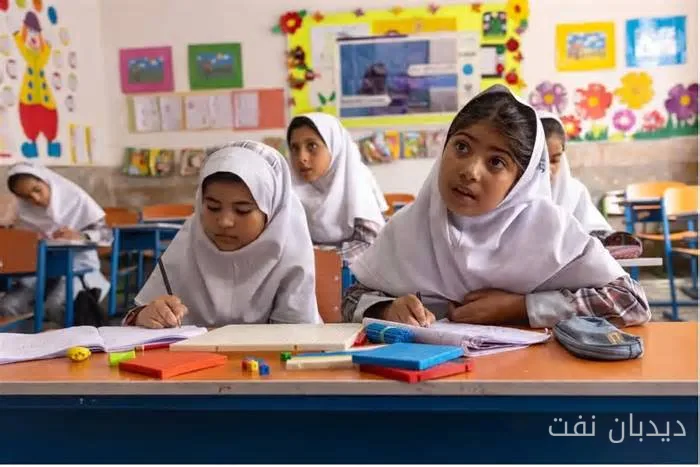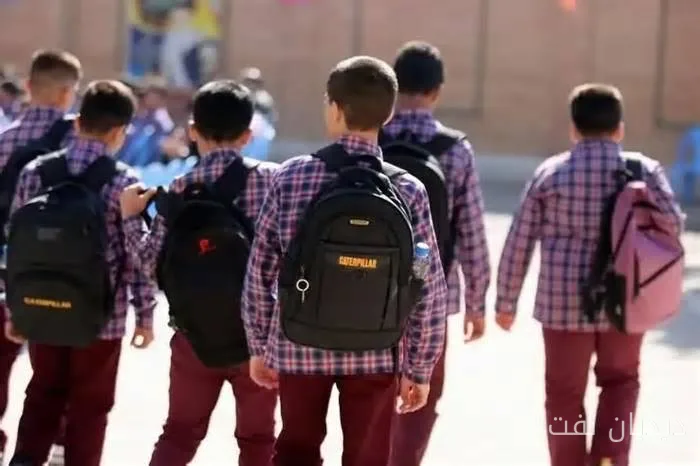
Reza Hakimzadeh, the Deputy Minister of Primary Education of the Ministry of Education, announced the delegation of decision-making authority regarding school closures to this ministry. He stated that the aim of this decision is to preserve students' learning time and emphasized the importance of independently assessing the conditions of each region.
New School Closure Policy
Hakimzadeh explained that with this delegation of authority, instead of implementing a blanket closure across a province or region, the Ministry of Education can make decisions based on the specific conditions of each area. He emphasized that there may be critical conditions in a specific area, but this does not necessarily mean that all schools in that province need to be closed. In this regard, he pointed out the importance of accurately analyzing the situation and conditions of the region.
Read more: The Hormuz Strait conference between Oman and Iran was canceled due to fundamental disagreements
Impact of School Closures on Learning
The Deputy Minister of Primary Education also referred to the negative impact of school closures on students' learning time. He stated that the duration of students' presence in schools in Iran is significantly less than in many other countries, emphasizing the need to reconsider policies related to learning time. Hakimzadeh noted that decisions regarding school closures should be made in a way that minimizes harm to the students' learning process.
Reasons for School Closures
In this context, Hakimzadeh mentioned factors such as air pollution, snowfall, and energy imbalance that could lead to school closures. Citing a research report, he emphasized that school closures do not significantly reduce energy imbalance and that more careful consideration should be given in decision-making. In his view, in many developed countries, students continue to attend school even in adverse weather conditions, and this should also be taken into account in Iran.
Cultural Change to Reduce School Closures
Hakimzadeh stressed the necessity of cultural change to reduce school closures, stating that educating appropriate behaviors and reforming consumption patterns can be effective in this regard. He specifically referred to energy usage during the winter season and mentioned that the school environment should be such that students can attend with appropriate clothing. This way, educational conditions can be maintained without increasing energy consumption.
In conclusion, Hakimzadeh emphasized that managing learning time and preventing unnecessary closures requires a fundamental reconsideration of certain policies and serious cultural change. This issue is not limited to the decisions of the Ministry of Education but also requires the attention and cooperation of other institutions.
Read more: Masoud Pezeshkian: Iran will not succumb to pressures · The Deputy Minister of Primary Education makes decisions regarding school closures