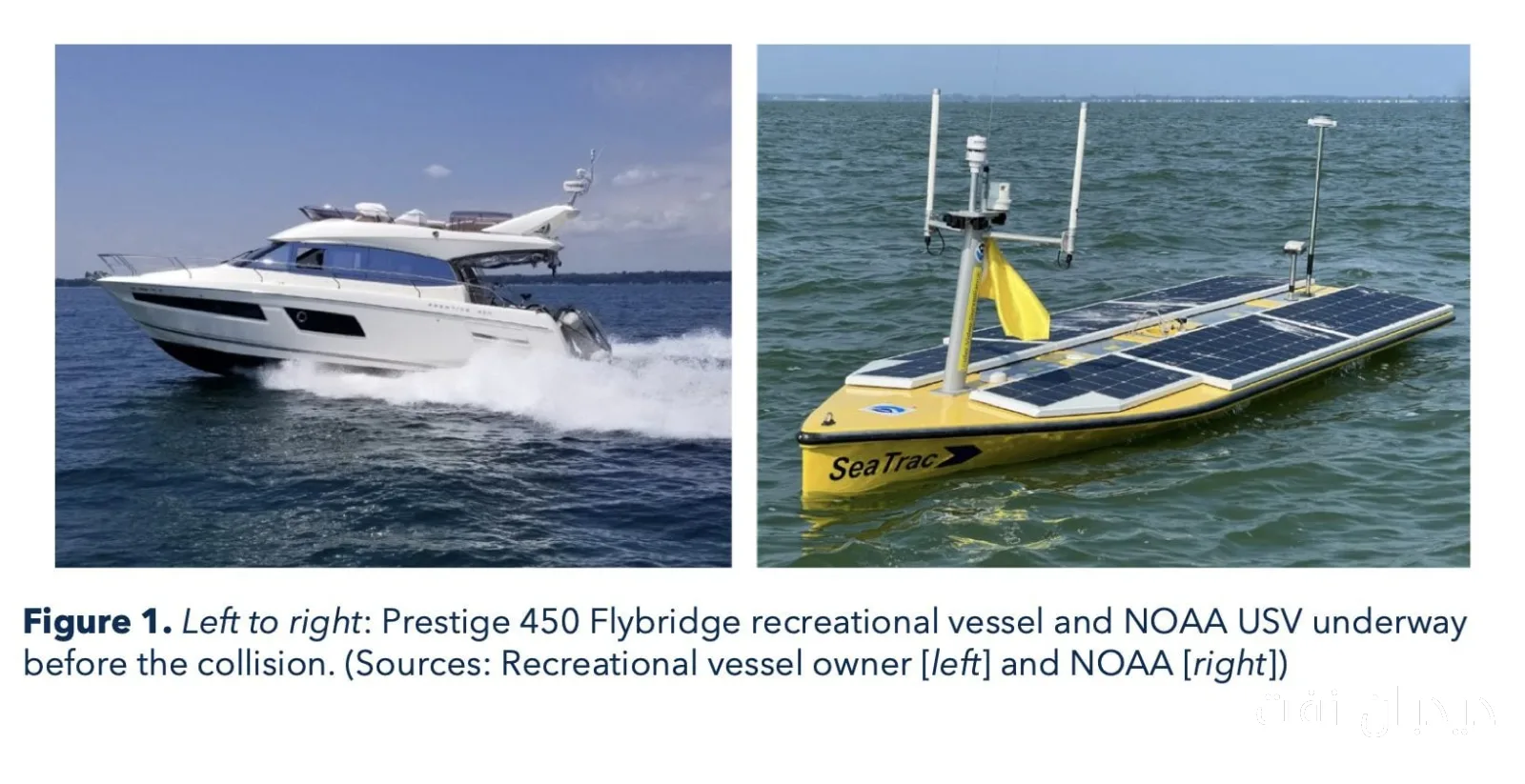
The National Transportation Safety Board (NTSB) has called for national safety standards for unmanned vessels following the collision of a NOAA research vessel and a recreational boat on Lake Erie on August 10, 2024. This incident highlights weaknesses in U.S. maritime safety regulations.
Details of the Collision and Damages
The collision occurred approximately six miles east-southeast of Monroe, Michigan. The NOAA research vessel SeaTrac SP-48 collided with a 45-foot recreational boat named Prestige 450 Flybridge. The research vessel became entangled with the recreational boat's propeller, and the two vessels were connected. Both vessels were taken to a nearby marina and then separated. In this incident, a minor injury was reported, and the NOAA vessel was declared a total structural loss, estimated at around $186,000. The damage to the recreational boat was also estimated at about $100,000.
Read more: Analysis of Asim Munir and the Impact of the U.S. Elections on Iran-Washington Relations
Safety Challenges and Deficiencies
The NTSB report indicates that the low-profile design of the research vessel made it difficult for other mariners to see. Only about one foot of the vessel's hull was visible above water, making it unlikely to be detected by radar or automatic identification systems typically used in recreational boats. Additionally, the vessel failed to provide an audible warning for nearby traffic.
At the time of the collision, the NOAA Great Lakes Environmental Research Laboratory was operating the vessel in an automated mode called "adaptive hold mode," which allowed the vessel to automatically return to predetermined points. A pilot was monitoring the vessel from shore, but the NTSB found this oversight to be inadequate and passive.
Overall, the vessel lacked the necessary autonomy to independently assess nearby traffic and take action to avoid a collision. The NTSB concluded that the combination of poor visibility and inadequate oversight effectively left the vessel unattended.
NTSB's Recommended Actions
Following this incident, the NTSB issued six safety recommendations aimed at improving visibility capabilities, preventing collisions, and enhancing remote monitoring. These recommendations emphasize the importance of establishing national standards for unmanned vessels in U.S. waters. The NTSB also urged the U.S. Coast Guard to create a national framework for the safety of unmanned vessels and to incorporate and update these standards in federal regulations.
Additionally, three recommendations were made to NOAA, which include revising internal procedures to ensure that unmanned vessels are identifiable by other mariners. These changes involve testing vessels against the types of traffic they may encounter and require appropriate remote monitoring in line with the actual level of vessel autonomy.
Read more: Iraq Returns to Maritime Trade with the Departure of a Cargo Tanker from Jebel Ali Port · Canada Invests $1.2 Billion in Maritime Safety