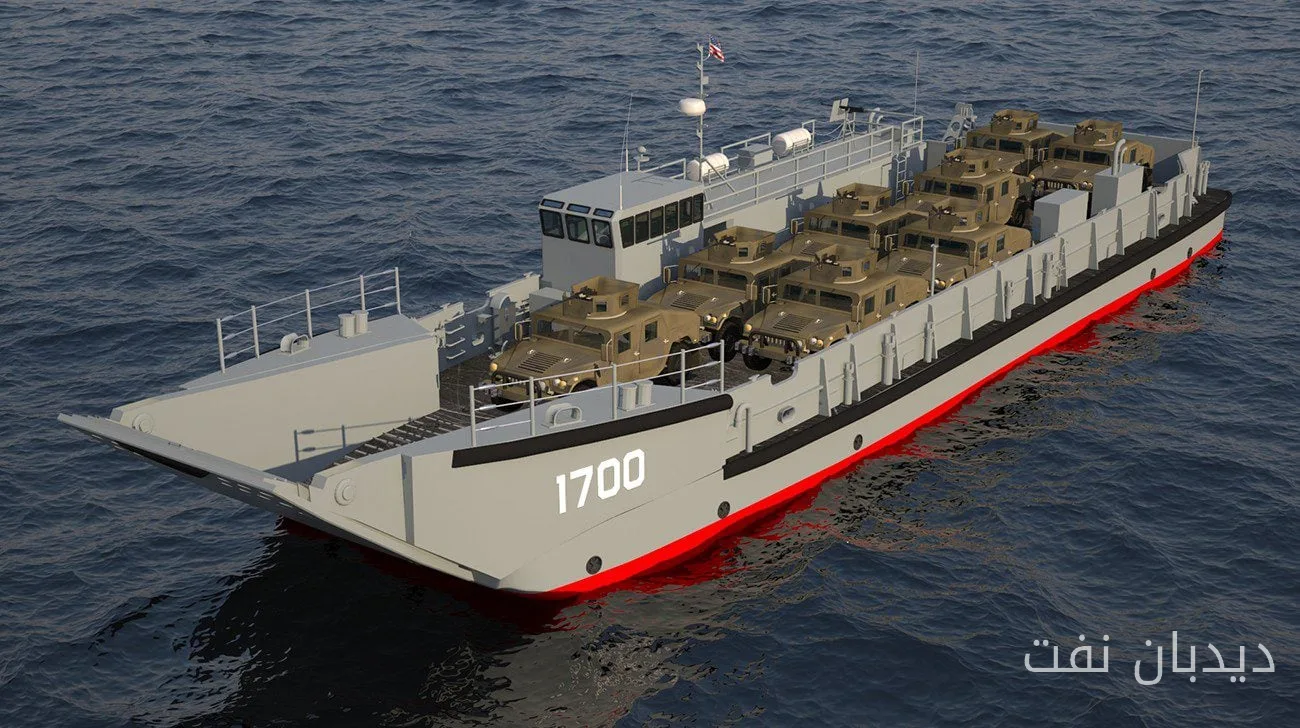
Master Boat Builders has signed a new contract to build three Landing Craft Utility (LCU 1700) vessels for the United States Navy as a prime contractor. This contract includes an option for a fourth vessel and construction of these vessels will begin at a facility located in Coden, Alabama. The project is expected to continue until 2029.
Contract Details and Background of Master Boat Builders
The value of this contract has not been officially disclosed, but it appears to represent a significant step for Master Boat Builders in the naval construction arena. The company has built a strong reputation over the past 45 years due to its skilled workforce. Greg Stanton, President of Master Boat Builders, has described this contract as an important milestone and highlighted the company's commitment to enhancing workforce capabilities and operations in the Gulf Coast.
Read more: Hamid Rahmani: Managing Electricity Consumption for 220,000 Agricultural Wells in the 'Sapad' System
Features of the New LCU 1700 Vessels
The LCU 1700 vessels, designed to replace the older LCU 1610 fleet, are approximately 139 feet long and capable of carrying up to 170 tons of cargo. These vessels are designed with features such as a front Ramp and rear Gate that facilitate easy loading and unloading of equipment and vehicles.
The U.S. Navy has described these vessels as "heavy connectors" capable of supporting amphibious operations as well as humanitarian assistance and crisis response. This contract also allows Master Boat Builders to play a direct role in delivering the vessels to the Navy, representing an important step towards strengthening construction in smaller shipyards and distributing work across various sectors.
Master Boat Builders has previously collaborated with Austal USA on various projects and has provided the necessary infrastructure to support Navy programs. This collaboration aims to demonstrate how smaller shipyards can participate in large government projects and free up the capacity of larger shipyards.
This new contract is part of the U.S. Navy's efforts to expand production capacity and utilize domestic shipyards across various maritime sectors. As the Navy and Marine Corps seek to improve the transportation of personnel, fuel, munitions, and equipment in dispersed operational areas, these new vessels can play a vital role.
Read more: Mohammad Jafar Ghaempanah Emphasizes the Need to Combat Fuel Smuggling · Escalation of Conflicts: Iran's Oil Fleet Targeted