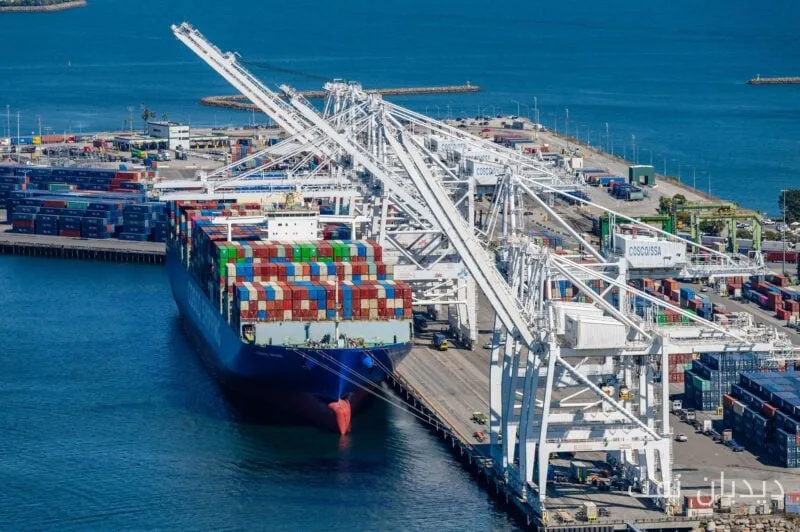
A coalition consisting of maritime, agricultural, manufacturing, retail, and logistics entities in the United States has urged the government to permanently suspend port fees for China-related ships. In a letter sent on October 30 to U.S. Trade Representative, Jimmy-Son Greer, the coalition welcomed the temporary extension of these fees until January 9, 2027, but called for their permanent removal.
Consequences of reinstating fees
The signatories of this letter include the U.S. Chamber of Commerce, the National Association of Manufacturers, the National Retail Federation, and other business entities that are deeply concerned that reinstating fees will lead to increased costs for American businesses, harm exporters, and disrupt global supply chains.
Read more: Secretary of the Iranian Electricity Industry Syndicate emphasized investment challenges
The groups have also warned that reinstating these fees will put additional pressure on supply chains that are already grappling with high shipping rates and equipment inventory challenges. Given that ships built in China account for a significant portion of global shipping capacity, the consequences of reinstating fees will extend beyond Chinese shipping companies and will impact transportation costs and the deployment of ships for American importers and exporters.
Concerns about foreign ships and shipbuilding strategy
The letter also referenced concerns about regulations targeting foreign roll-on/roll-off ships, emphasizing that this issue could affect shipping companies from U.S. allied countries and disrupt transportation services that American manufacturers rely on.
For importers, reinstating fees could mean higher shipping burdens and increased prices for consumer goods and industrial inputs. For exporters, including agricultural and industrial manufacturers, these fees could reduce the competitiveness of American products in foreign markets.
The coalition has also challenged the notion that port fees will significantly aid in rebuilding the U.S. commercial shipbuilding industry. These groups believe that the fundamental challenges affecting China's dominance, including limited shipbuilding capacity in the U.S., a labor shortage, and a lack of competitive options, remain unresolved.
Instead, the coalition is calling for a long-term shipbuilding strategy supported by sustainable investment and commitments from both public and private sectors. The Global Transportation Council has also submitted its views to the USTR and supported efforts to improve the American shipbuilding industry, arguing that sustainable legal actions, government support, and workforce development are more effective than public ship fees.
The industry's latest request comes after the Trump administration's proposal on October 23 to extend the suspension until January 9, 2027, while Washington and Beijing continue to negotiate over China's dominance in maritime, logistics, and shipbuilding sectors. The fees were initially imposed in October 2025 and were then suspended the following month under a broad trade agreement between the United States and China. The current suspension is set to expire on November 9 unless the proposed extension is enacted.
Read more: Masoud Nili: Stabilizing energy prices leads to imbalance and pressure on the economy · Bahri Shipping Company orders three large oil tankers worth $451 million