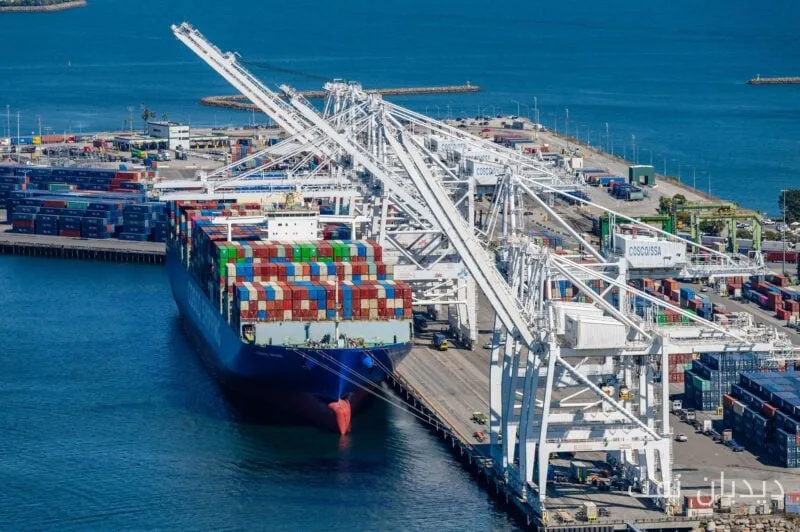
Recent developments in the global liquefied gas market indicate the entry of emerging players into this field. Canada will join the ranks of liquefied gas exporters with the launch of the LNG Canada project in 2025. This country has a favorable position for developing its exports due to access to rich gas resources and the ability to ship cargo from the Pacific coast to Asian markets.
The Role of Mauritania and Senegal in the Liquefied Gas Market
Alongside these developments, Mauritania and Senegal will also export their first LNG shipments in 2025 through a joint project. This move could enhance the influence of these two countries in the global gas market, provided that their subsequent phases and production capacity are developed correctly. Nigeria and Congo are also expanding their supply and are recognized as examples of export development outside traditional market hubs.
Read more: Masoud Abka: Infrastructure Development Delays Hinder Steel Production
Forecasting New Export Capacities
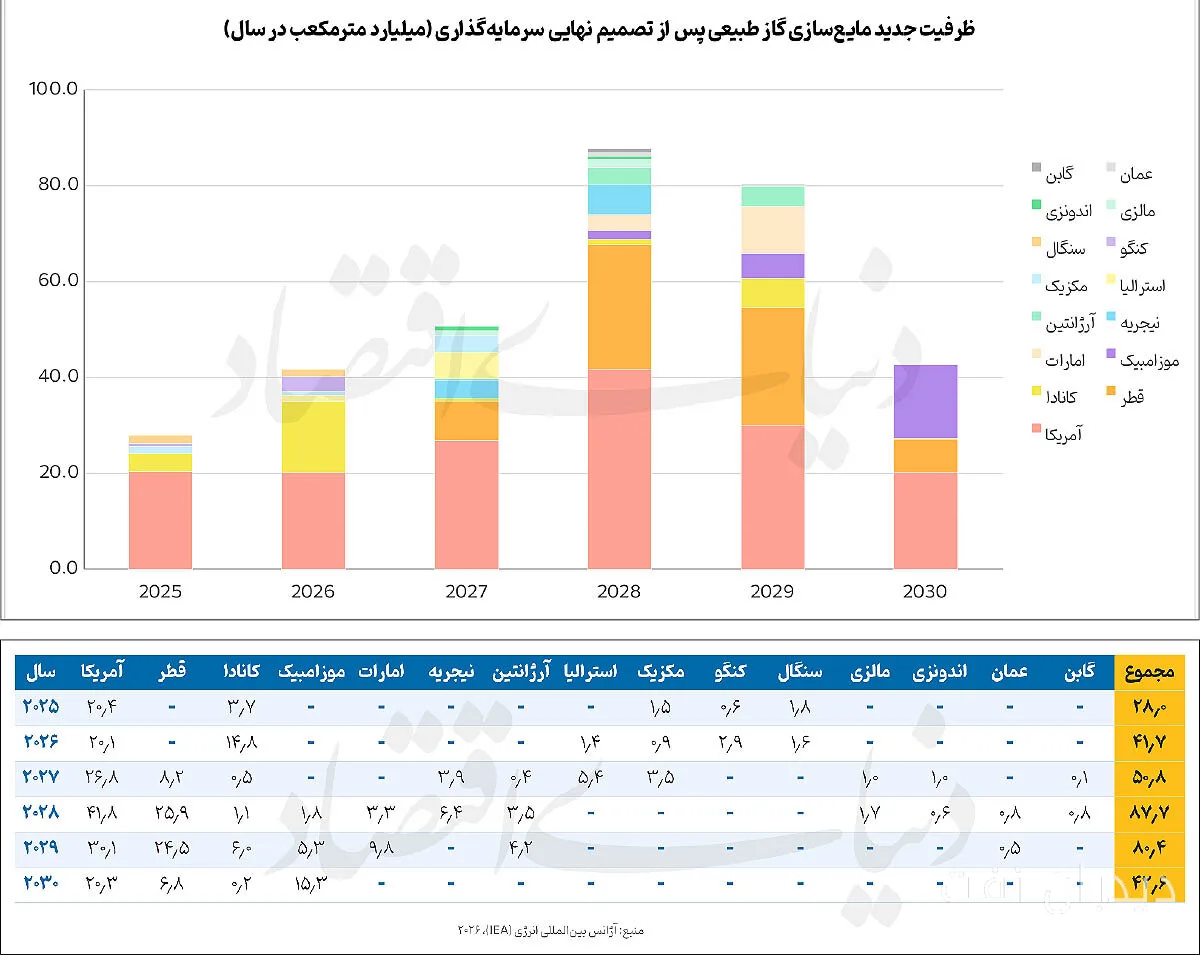
The International Energy Agency (IEA) report on October 1, 2023, predicts that the global liquefied natural gas export capacity will increase by more than 330 billion cubic meters per year between 2025 and 2030. This increase will come from projects that reach final investment decisions and are under construction by early 2025. The new capacity entering the market each year is expected to gradually rise from about 30 billion cubic meters in 2025 to its peak of around 90 billion cubic meters in 2028.
However, geopolitical risks, particularly the repercussions of ongoing conflicts in the Middle East, as well as potential delays in project implementation, could significantly alter this trend. Additionally, it is anticipated that some older LNG projects will face production declines in the coming years, a factor that will offset part of the substantial supply growth resulting from the launch of new projects.
The Impact of Supply Disruptions on the Market
Disruptions in the Gulf supply have pushed Asian importers towards diversifying their purchasing sources. Buyers have shown a greater inclination to source cargo from regions such as West Africa, Indonesia, Australia, and North America. On the other hand, reports indicate that LNG demand in some Asian markets has weakened due to high prices, slowing economic growth, and increasing domestic production. It is also expected that Europe’s LNG demand will decrease by about 23 percent between 2025 and 2030.
The International Energy Agency has also stated that disruptions in transit through the Strait of Hormuz and damage to Qatar's LNG facilities have altered the global supply outlook and delayed the impact of new capacity building by at least 2 years. The total supply reduction resulting from short-term disruptions and their medium-term consequences could reach about 120 billion cubic meters between 2026 and 2030.
Read more: Turkey’s Foreign Minister Warns of Economic Consequences of Closing the Strait of Hormuz · Reopening the Gabd-Rimdan Crossing in Iran and Pakistan