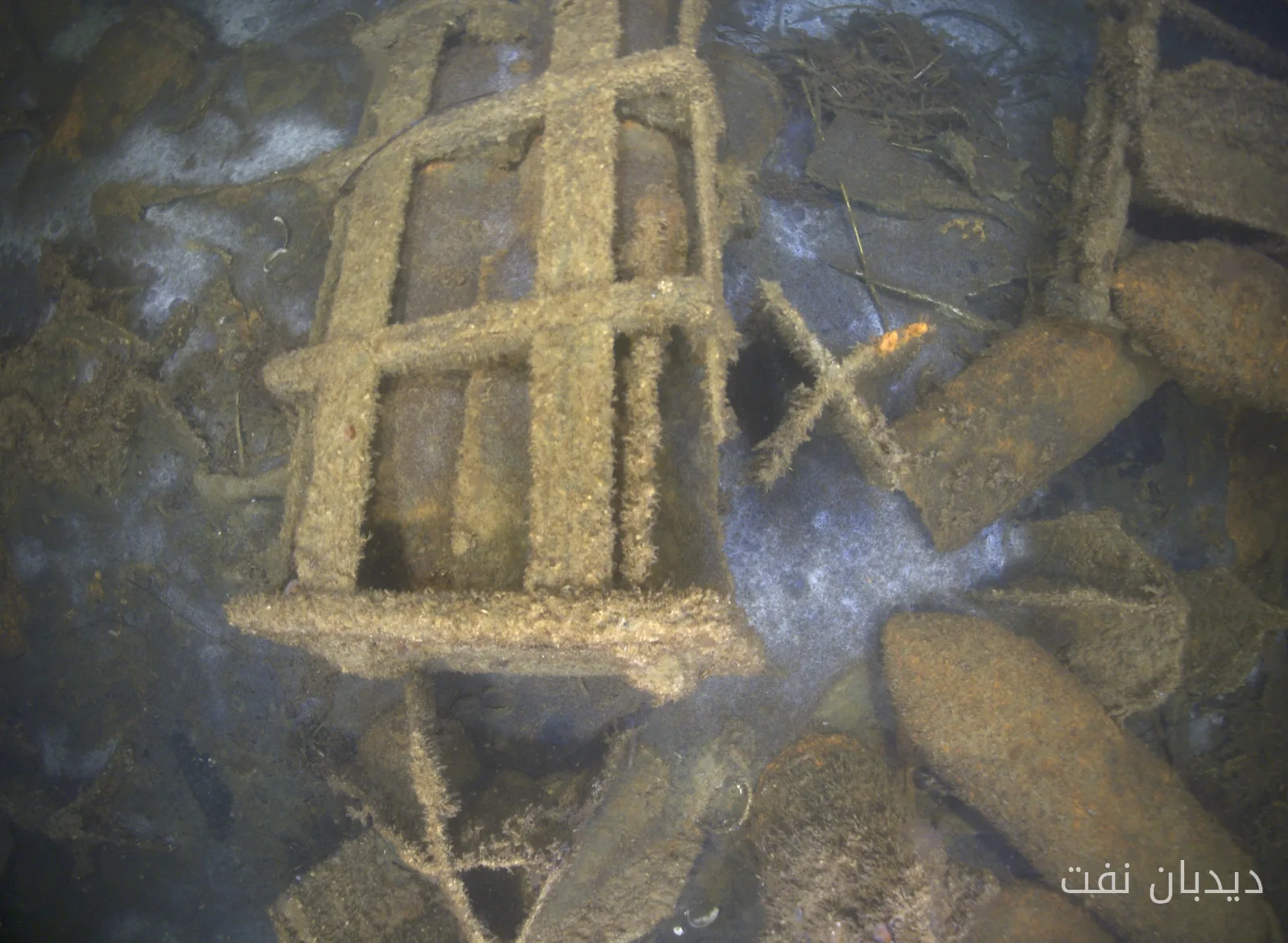
Germany has launched an urgent project to recover tons of abandoned munitions in the North and Baltic Seas. These munitions, left in these waters at the end of World War I and II, are considered a serious threat to the marine environment due to the release of toxic chemicals.
Environmental hazards from abandoned munitions
More than 1.5 million tons of munitions were deliberately buried in German waters at the end of World War II. About 300,000 tons of these munitions remain in the German Baltic Sea, with the rest in the German North Sea. A study conducted last year by the GEOMAR Helmholtz Centre for Ocean Research in Kiel showed that these munitions have increasingly become a threat to the marine environment due to rusting and the release of toxic chemicals.
Read more: The United States' claim for deep-sea mining has been equal to ISA permits
Chemicals related to munitions have been identified in water samples collected from the Baltic Sea, with some samples nearing critical toxic concentration levels. As rusting progresses, pollution is expected to increase, posing greater risks to the environment. This threat is particularly exacerbated by rising temperatures and storm activity due to climate change, which accelerates the release of chemicals.
Cleanup and research plans
The German federal government, under pressure to classify buried munitions as "historical pollutants with emerging concerns," has launched a project to remove these munitions. As an urgent measure, the government has signed a contract for the construction and operation of a munitions recovery platform.
As part of this project, the research vessel Heincke has been dispatched on a two-week journey to visit several burial sites in the German Bay to map the munitions hidden beneath the sand and prepare for a trial recovery operation. The research team aboard this 55-meter vessel, operated by the Alfred Wegener Institute (AWI), will also investigate the impacts of chemicals released from munitions on marine life.
During this trip, the team intends to visit the wreck site of the SMS Mainz, a German light cruiser that sank in the North Sea in August 1914. The battleship Blücher is also on the team's visit agenda. For both ships, researchers will analyze their condition and especially the threat posed by their munitions to the marine environment.
Matthias Berner, the leader of the REMARCO project, stated: "After more than 100 years on the seabed, there is a greater risk that these ships will collapse. Therefore, monitoring their condition is important. Additionally, with increasing rusting, toxic and carcinogenic explosives are released from the remaining munitions. These pollutants threaten marine life, food safety, and human health."
As part of another project called CONMAR, Heincke will subsequently be sent to seven munitions burial sites in the German Bay. Previous research has shown that munitions are hidden beneath the sand and can be mapped using magnetometry.
Scientists believe that Germany's munitions cleanup operations could serve as a model for the removal of such hazardous waste worldwide.
Read more: SkyTruth's new analysis of oil pollution caused by ships in the seas · Maersk is exploring the potential of ethanol as a marine fuel