Maersk has conducted a new study examining the potential of ethanol as a marine fuel. This research, carried out by the Mærsk Mc-Kinney Møller Center for Zero Carbon Shipping, investigates the feasibility of using ethanol in existing marine engines and the necessary modifications for its commercialization.
Ethanol's Application in Marine Engines
This study, titled "Ethanol as a Marine Fuel: A Feasibility Assessment," aims to evaluate whether ethanol can be used in existing marine engines and what modifications are necessary for this purpose. The findings of this research are published at a time when shipowners are seeking fuels with lower emissions that can be produced and supplied on a large scale.
Read more: Approval of the FSRU Gasnet Plan by Lloyd's Register
Ethanol also benefits from established production and distribution networks, particularly in the United States and Brazil, which can provide an advantage over fuels that require entirely new supply chains.
Challenges and Opportunities
This research examined two potential applications: the use of ethanol in engines designed for methanol and the blending of ethanol with marine diesel for use in conventional diesel engines. Researchers found that ethanol is technically highly compatible with methanol-compatible engines, requiring relatively limited modifications for compatibility with this fuel.
Given that ethanol and methanol have similar chemical properties, engines designed for methanol are generally capable of operating on ethanol after adjustments to fuel injection timing and engine controls. Additionally, ethanol has a higher energy density, meaning that ships require less storage capacity compared to methanol to achieve the same range.
The remaining challenges are primarily related to engine optimization, validation, and certification, rather than major technical barriers.
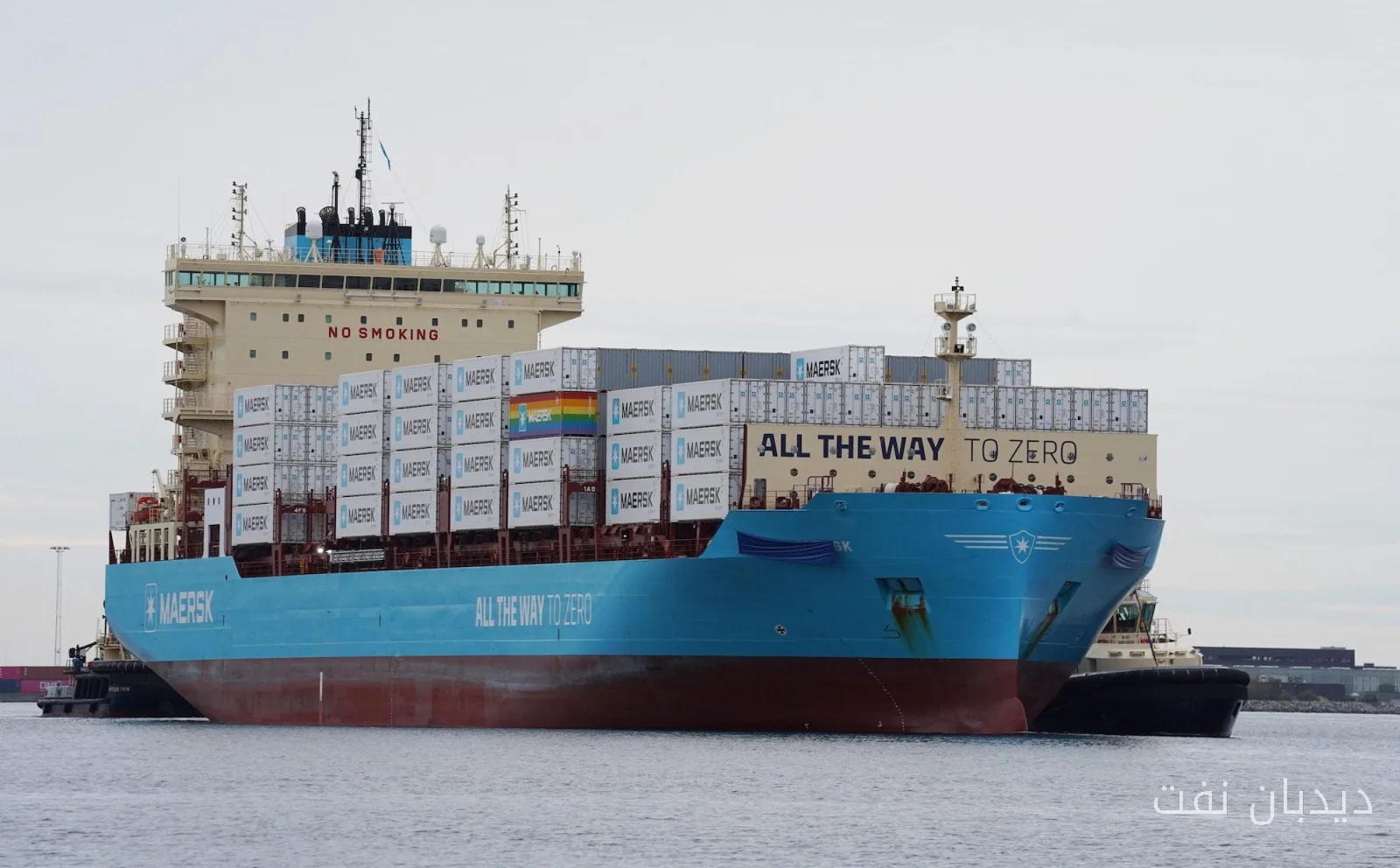
Since 2025, Maersk has been testing ethanol in its container ship named Laura Maersk, initially using a blend of 10 percent ethanol and then moving to higher concentrations. In June 2026, the company reported successful trials using 100 percent ethanol.
Recently, Maersk conducted a commercial ethanol bunkering operation in Houston with the Tangier Maersk vessel, described as the first commercial ethanol bunkering from ship to ship in the United States.
Engine manufacturers have also made progress in this area. Companies such as Everllence, WinGD, Wärtsilä, and HD Hyundai have reported advancements in testing ethanol in marine engines, while Caterpillar introduced conversion kits for some MaK engines to operate on methanol or ethanol last July.
The more challenging question is whether ethanol can also be used by a larger fleet of conventional diesel ships. To explore this possibility, researchers examined ethanol-diesel blends and identified two significant challenges in this regard.
First, even relatively small amounts of ethanol significantly reduce the flash point of the fuel mixture. For example, a blend containing just 10 percent ethanol had a flash point of approximately 13.5 degrees Celsius, which is significantly below the 60 degrees Celsius required for conventional marine fuels.
Second, ethanol-diesel blends tend to separate during storage, especially at low temperatures, raising concerns about transportation and fuel reliability on ships. Researchers identified onboard blending systems as a possible solution, where ethanol and diesel are mixed separately before entering the engine.
Despite these limitations, the study indicates that converting some existing ships to operate on ethanol blends could be economically viable. For example, using a Kamsarmax vessel as a case study, researchers estimated that modifying the ship for ethanol-diesel blends would cost approximately half of the expense of a complete conversion to dual-fuel methanol capability.
Read more: Amir Ghaderi Emphasizes the Need for Solar Energy Development in Kurdistan · Greenpeace Activists Occupy the Research Vessel Tangaroa in New Zealand