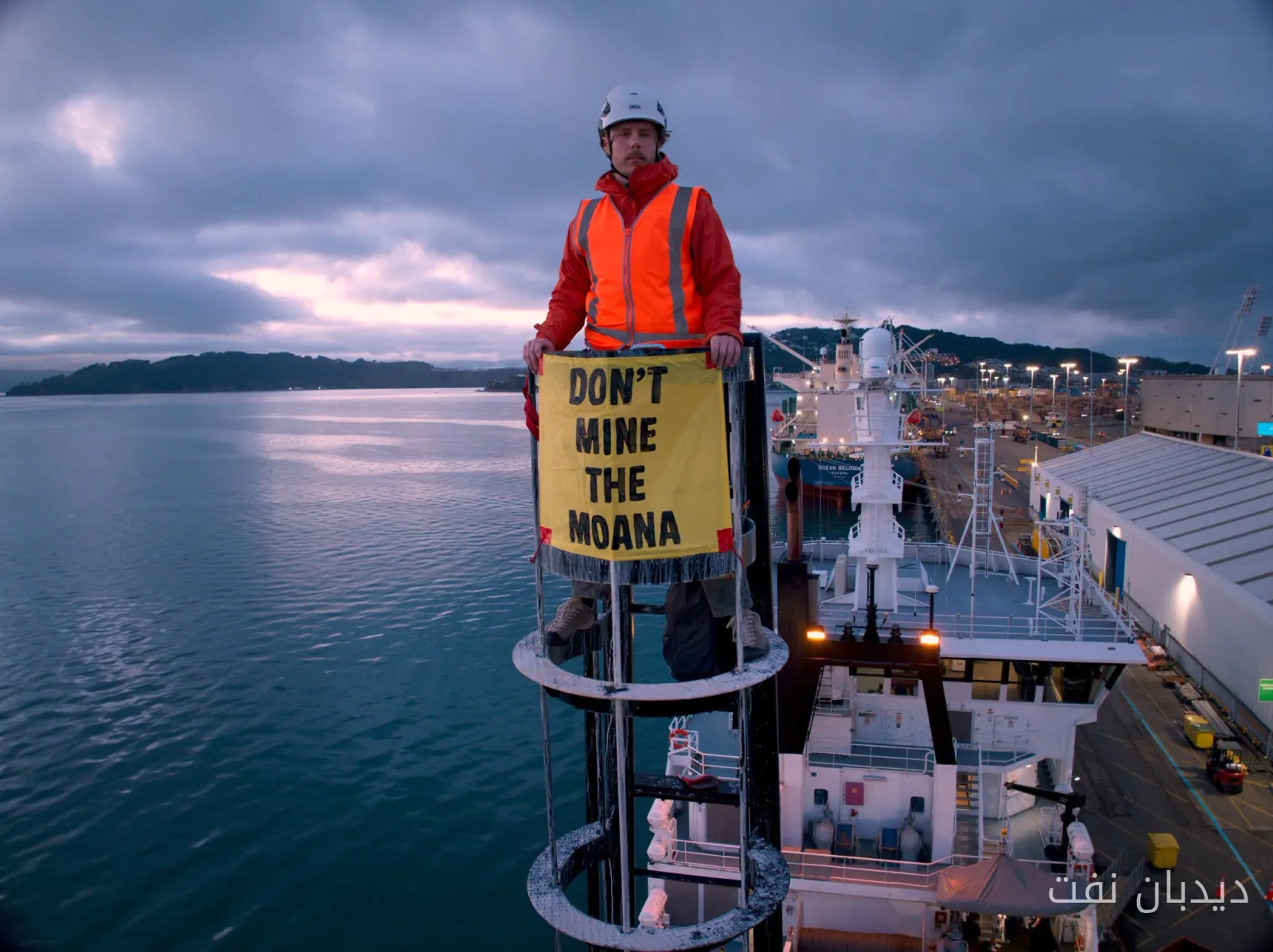
Greenpeace activists in New Zealand occupied the research vessel Tangaroa to increase pressure on deep-sea mining programs. The vessel entered Wellington Harbor on September 26, 2026, after returning from an exploratory mission in the Pacific Ocean.
Details of the Tangaroa vessel occupation
The RV Tangaroa, which is the only research vessel with ice-breaking capabilities and dynamic positioning in New Zealand, had recently completed a mission on behalf of the American company Glomar Minerals. During the occupation, one activist dressed as Donald Trump, the former President of the United States, and raised the American flag from the vessel. Another held a banner reading "Don't mine Moana." The activists remained on the vessel for about seven hours to make their protest heard by officials.
Mission and its implications
The Tangaroa, built in 1991 and measuring 70 meters in length, is used as a key tool for scientific and marine engineering explorations and has conducted numerous missions in the Southern and Antarctic Oceans. Greenpeace stated that this occupation followed Tangaroa's return from the Clarion-Clipperton Zone (CCZ) in international waters of the Pacific Ocean, where the ship had been investigating deep-sea mining.
According to Glomar Minerals, Tangaroa traveled from Tahiti to CCZ in late July to examine its license area for rich multi-metal granules containing critical minerals. This mission was the first comprehensive geological and biological survey in the UK2 license area in over 40 years. Glomar Minerals' license areas cover approximately 133,000 square kilometers of deep ocean floor, which includes multi-metal granules containing manganese, cobalt, nickel, copper, and rare elements in one ore.
After 65 days from this mission, Tangaroa returned to Wellington Harbor, bringing environmental data and resources expected to influence Glomar Minerals' decision to begin commercial exploitation next year.
Greenpeace activists believe that if deep-sea mining continues, it will lead to the destruction of the ocean floor and pose a risk of irreversible damage to the oceans we all depend on. Additionally, this action is seen as a threat to the way of life and cultural heritage of Pacific communities and must be stopped.
Deep-sea mining has become a controversial and contentious issue in New Zealand, with environmentalists and activists believing that these activities cause serious harm to marine ecosystems and have negative economic impacts on coastal communities.
The United States government is recognized as a major supporter of deep-sea mining. Last April, Trump issued an executive order to expedite the issuance of commercial permits for deep-sea mining. Also, earlier this year, the U.S. government launched the Vault project aimed at securing the global supply chain and storing minerals for military and industrial purposes.
The Tangaroa has previously faced protests due to its use by the international oil industry in surveying New Zealand waters for deep-sea oil drilling.