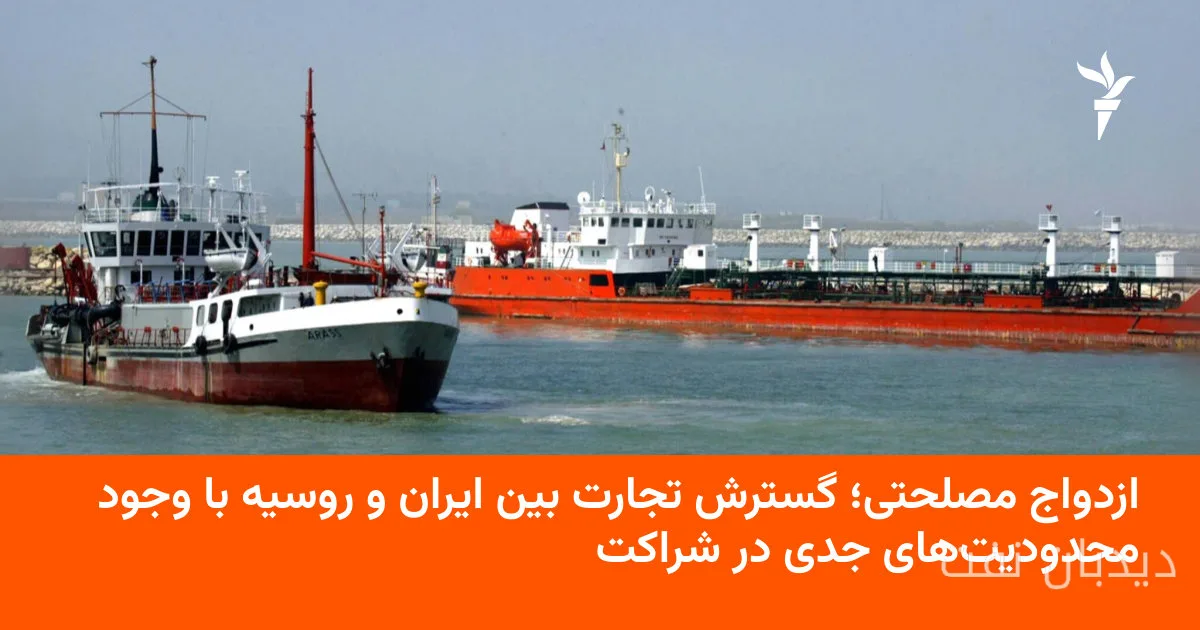
Iran and Russia, two countries under the harshest global sanctions, are expanding their trade and oil relations, especially in the Caspian Sea. These collaborations have emerged in response to international sanctions and the need to break free from dependence on the Western-dominated financial system.
Expansion of Maritime Fleet and Trade Routes
According to reports, the number of active ships flying the flags of Iran and Russia in the Caspian Sea increased by 21 percent in August compared to last year. This increase in maritime activity occurs amid military attacks and economic sanctions that have disrupted normal trade routes. In particular, the movement of ships between the two countries has significantly increased.
On the other hand, given the current conditions, the shadow fleet of Iran and Russia is expanding. This fleet includes ships operated under complex ownership structures that are not easily traceable. Nitya Lab, a regional affairs analyst, estimates that this fleet has over 1,300 ships, and one in five oil tankers in the world belongs to this fleet.
Trade Exchanges and Existing Challenges
The volume of bilateral trade between Iran and Russia reached approximately $5.8 billion in 2025, reflecting a 21 percent increase compared to the previous year. A significant portion of this trade is dedicated to agricultural products and food, but military collaborations are also informally expanding.
The Iranian government sent attack drones to Moscow in the early stages of Russia's invasion of Ukraine, indicating the depth of military relations between the two countries. Additionally, reports have emerged about the shipment of drone parts from Russia to Iran via the Caspian Sea.
Moreover, the two countries are striving to minimize their dependence on Western financial networks for payments and banking exchanges. The use of national currencies and the establishment of interbank financial messaging systems have contributed to this goal.
Despite the expansion of relations, infrastructural and geopolitical barriers still hinder the full implementation of trade and transportation between Iran and Russia. Limitations of the Volga-Don waterway, shallow waters, and the limited capacity of ports are among these obstacles. Additionally, in August, three oil tankers carrying crude oil under the Russian flag were recorded on this route, which turned off their automatic identification systems as they approached the ports. This action makes tracking oil shipments more difficult.