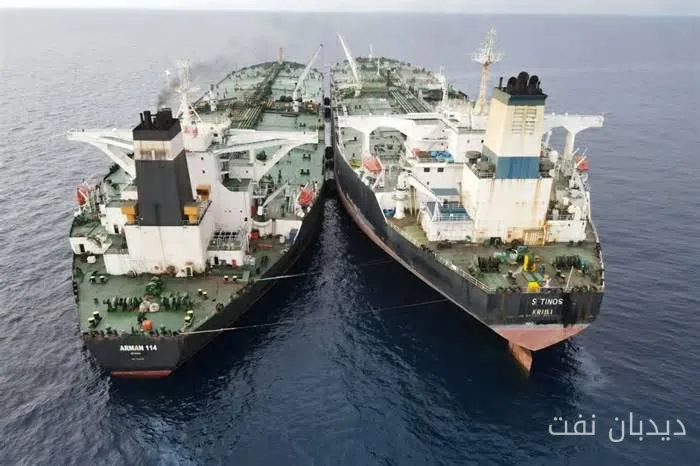
Two tankers carrying a shipment worth several hundred million dollars of Iranian oil are heading towards the shores of the United States. Washington intends to use legal mechanisms to seize the tankers and their cargoes.
Movement of Tankers Towards the Shores of the United States
According to shipping data, the tankers "Tiffany" and "Majestic X" have recently begun their journey from the shores of Brazil towards the Atlantic Ocean. These two tankers were seized by American forces in the Indian Ocean in April. This action is part of the U.S. policy to exert more pressure on Iranian oil exports.
Read more: Tankers Carrying 6 Million Barrels of Iranian Oil on Their Way to America
Details of the Cargo and Its Value
These two tankers are carrying approximately 4 million barrels of Iranian oil, which, at current market prices, amounts to hundreds of millions of dollars. The U.S. Department of Justice has also announced that legal proceedings to seize these tankers and their cargoes have begun. According to reports, a third tanker named "Linor" or "Davina" is also heading west towards the Atlantic Ocean, which was targeted by American forces in June.
Dimensions of Sanctions and American Pressures
Washington's action comes as the country seeks to intensify maritime pressures and impose further restrictions on Iranian oil exports. The main goal of the U.S. is to put Tehran's export routes under pressure. If these two tankers reach U.S. ports, their cargoes will become some of the largest shipments of Iranian oil to arrive on U.S. shores following similar actions by Washington in 2023.
American officials are also exploring the use of maritime legal mechanisms to seize the tankers. These actions are known as "maritime spoils" and could create new dimensions of pressure in the realm of trade and maritime transport.
Read more: New Shipment from Precious Shipping with Tanker Sunisa Naree in Singapore · Iranian Tankers on Their Way to Transfer Sanctioned Cargoes



