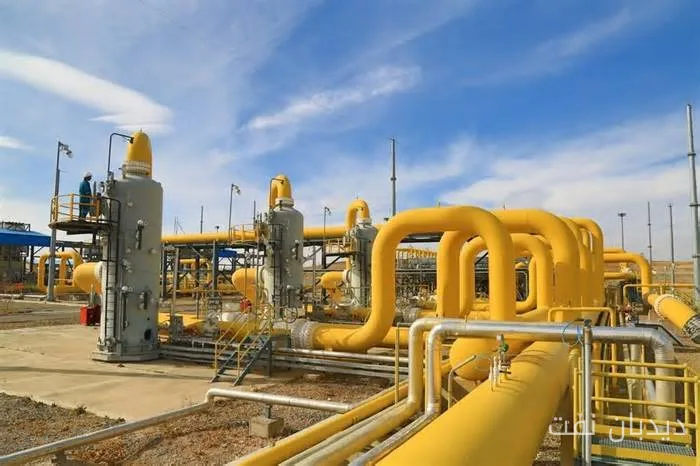
Saeed Tavakoli, the CEO of the National Iranian Gas Company, in his latest statements announced that with the early completion of gas injection operations in the Sarajeh reservoir in Qom, a new record has been set for the volume of gas stored in this strategic reservoir for use during the cold months of the year. This action has been taken on the eve of the cold season and aims to ensure sustainable energy supply in the country.
The Importance of Gas Storage in Winter
Tavakoli further stated that the increase in storage volume in the Sarajeh reservoir, along with coordination in the production and distribution chain, acts as an important support for maintaining the stability of the energy transmission network. He emphasized that safely overcoming winter challenges will not be possible without the cooperation of consumers in optimizing consumption and adjusting the temperature of heating systems.
Read more: Ahmad Sadeghian: Two solutions to overcome the energy crisis
In this context, questions have been raised about the role of underground storage reservoirs in energy security and their ability to respond to the gap between production and consumption during peak cold. Studies show that gas consumption in the residential and commercial sectors significantly increases during cold days, and in these conditions, underground gas storage (UGS) technology acts as a massive energy battery.
Challenges of Storage and the Need for Development
Despite the high importance of recent achievements, existing realities show that the gap between current storage capacity and actual needs during freezing days is significantly notable. According to international standards, countries should store 10 to 20 percent of their annual consumption in underground reservoirs, while in Iran this figure is less than 3 percent.
During the peak cold days of winter, the imbalance between gas production and consumption reaches a figure of 200 to 300 million cubic meters per day. Therefore, even if the Sarajeh reservoir is completely full, it will not be able to meet the extensive national needs on its own.
Stabilizing the country's gas network and preventing industry shutdowns requires a change in management approach and the implementation of long-term strategies. Accelerating the completion of new phases and developing gas fields, especially in the central regions of the country, can be an effective solution for increasing gas extraction capacity.
Ultimately, investment in storage projects and collaboration between large industries and the government can help strengthen the energy supply chain in the country and prevent economic damages.
Read more: Gas consumption management in Lorestan with priority on domestic gas supply · Moscow meeting and emphasis on gas cooperation between Iran and Russia