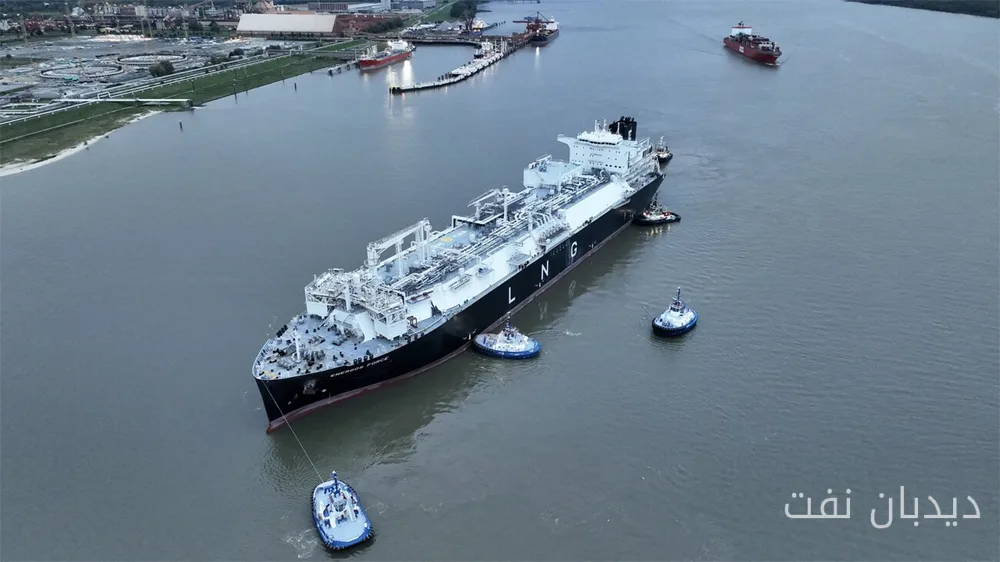
The state-owned Deutsche Energy Terminal GmbH (DET) announced that it has transferred its fourth floating storage and regasification unit (FSRU) named Energos Force to the port of Stade-Bützfleth near Hamburg. This action is part of the program to increase Germany's LNG import capacity in response to the energy crisis resulting from the Ukraine war and economic sanctions against Russia.
Details of the Energos Force Unit
The Energos Force vessel, weighing 94,361 tons, is being prepared for the start of new regasification operations at the end of Stade port. This unit, with an annual injection capacity of up to 3.2 billion cubic meters of natural gas by 2027, is recognized as a key component of Germany's energy supply security. The unit is expected to be operational by November 2026.
Read more: The U.S. has removed several Belarusian companies from its sanctions list
Dr. Peter Rutgen, CEO of DET, stated: "The return of this unit to the port of Stade marks the beginning of preparations for the commissioning of this facility, and all necessary partners in this project are cooperating with full commitment."
Background and Objectives of the FSRU Program
The German FSRU program began in December 2022 with the arrival of the Höegh Esperanza unit, which was Germany's first LNG facility. With the expansion of infrastructure and increased regasification capacities, Germany is seeking to reduce its dependence on Russian gas. Currently, with the arrival of new units, DET aims to meet the energy needs of about 2.6 million four-person households for a full year.
The regasification operations of these units are taking place while new facilities are still being completed. DET had leased the Energos Force unit as a regasification unit in Jordan and has now transferred it to the port of Stade. This vessel, built in 2021, can regasify up to 500 million cubic feet of gas daily using a steam system in a closed gas supply system.
German ministries have emphasized the success of the FSRU program and noted its rapid progress. This program helps ensure a sustainable gas supply for the country and gradually replaces Russian gas sources.
Read more: The Philippines is taking steps to amend shipbuilding industry regulations · An Iranian oil tanker shipment is being transferred to Germany amid sanctions