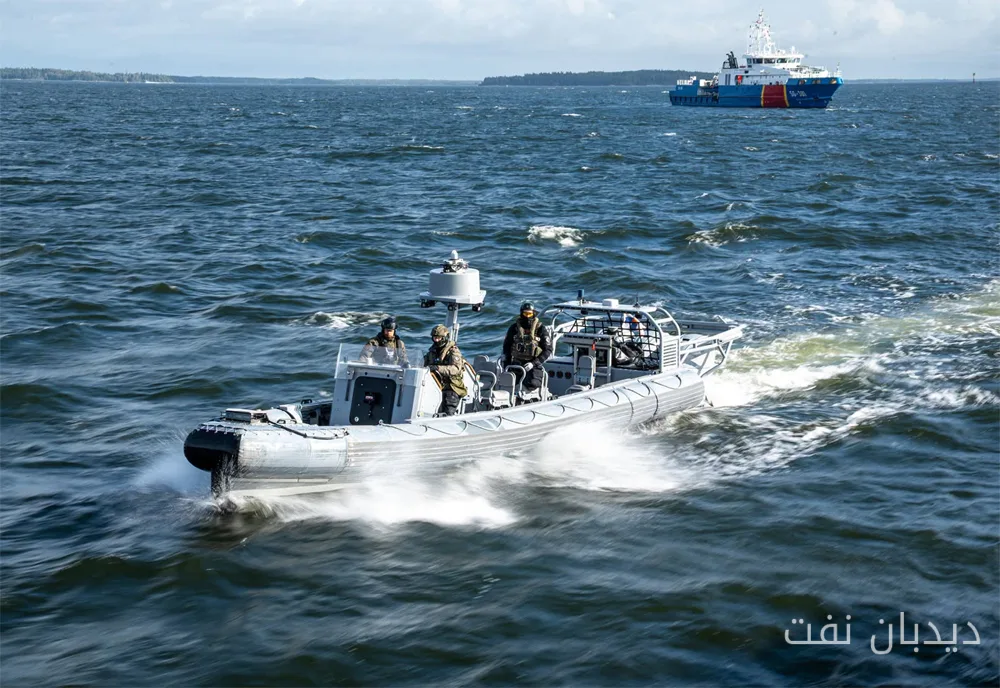
The commanders of the Finnish and Swedish navies reached key agreements on September 17, 2026, during a meeting aimed at strengthening maritime security in the Baltic region. These agreements are part of joint efforts to improve security measures in the Baltic Sea and follow a three-day exercise called Marsec conducted by Finnish border guards, funded by the European Union.
Details of Security Agreements
Thomas Tilikainen, the commander of the Finnish Navy, elaborated on the scope of the agreements in a press conference with his Swedish counterpart. The two countries agreed on a series of steps and resource exchanges that will enhance coordination and responsiveness to maritime threats. One immediate action is the deployment of one of Sweden's Visby-class corvettes in the Gulf of Finland, which will operate under the command of Finnish defense forces. This decision allows Finland to concentrate its naval forces in the eastern part of the Gulf of Finland, where the greatest threats, including those posed by drones, are felt.
Read more: Hakimzadeh: Education is the decision-making authority regarding school closures
Exercises and Focus on Operational Capabilities
During these exercises, forces focused on identifying, seizing, and controlling a vessel that was at risk due to dragging anchor, using the icebreaker Polaris as a target. These exercises were part of the EU cable action plan aimed at improving underwater infrastructure security. Finnish border guards coordinate the ISM (Integrated Surveillance Mechanism) project in the Baltic region, based on the EU action plan for cable security.
Attention to the capabilities of interaction and cooperation among naval forces was another focus of this meeting. Information sharing, coordination of command centers, and targeted exercises aimed at improving responses to challenging maritime conditions were among the topics discussed. These exercises also included incident management, threat response, and monitoring maritime activities.
Ultimately, the actions of these two countries to strengthen Baltic maritime security represent a strategic and purposeful collaboration that could be useful in facing potential future threats. These agreements are seen as an important step towards the overall security of the Baltic region and the protection of vital maritime infrastructure.
Read more: Analysis of the fuel smuggling situation and the increase in per capita energy consumption by Qaimpanah · Sweden's immigration policy: Ruthless expulsion of Britons