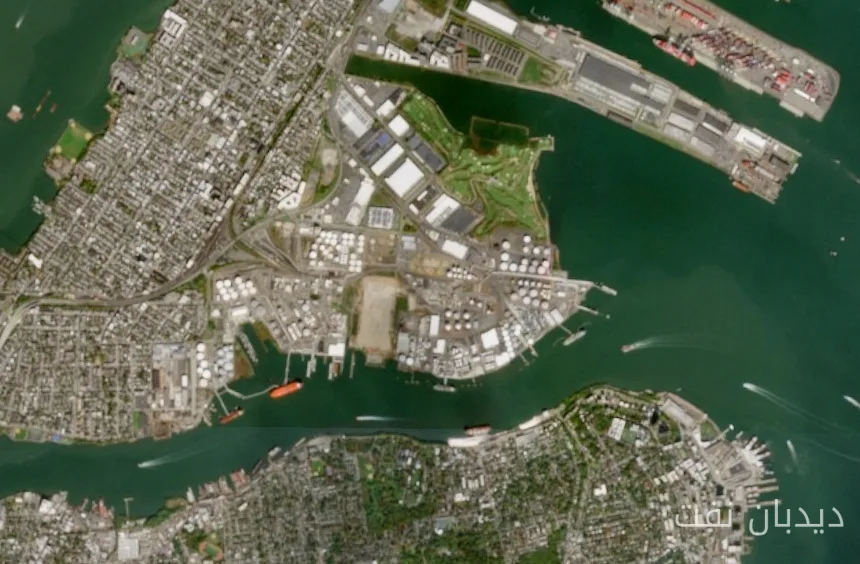
Mikie Sherrill, the Governor of New Jersey, has strongly opposed the recent agreement between former U.S. President Donald Trump and Russian President Vladimir Putin regarding the provision of additional diesel for the U.S. market. Sherrill stated in a statement that she is looking to prevent any tankers related to this agreement from entering New Jersey ports.
Details of the Agreement and Reactions
Sherrill emphasized: "Trump's diesel agreement with Putin is corrupt and illegal, and I am assessing options to stop the entry of these shipments into the Port of New Jersey." These remarks come as seven potential tankers are en route from Russia to the United States. The environmental NGO Greenpeace has stated that the details of these tankers' shipments are still unclear; however, the website TankerTrackers.com believes that at least two tankers may be carrying UAN fertilizer, which is considered an unauthorized agricultural shipment and completely legal.
Read more: The Role of Sinokor's WhatsApp Messages in Determining Oil Transportation Rates
Legal and Political Consequences
The closest tanker to its destination, the Taurus tanker, is currently moving near the eastern coast of the United States and is expected to arrive on November 5. Democratic senators and congressional representatives have warned ports, banks, energy companies, and at least two ship owners about the potential legal consequences of facilitating Russian fuel imports. The main issue relates to the "End of Russian Oil Imports" law passed in 2022, which bans all Russian energy products from the United States.
Removing this ban requires congressional approval and a certification from the President indicating the end of the war in Ukraine. Since such conditions have not yet been met, government critics claim that Russian fuel imports are illegal, despite conflicting statements from the U.S. Treasury Department.
The consulting group Rapidan Energy has informed its clients in a note that "Moscow and Washington are still trying to find buyers, but in our view, it is unlikely that shipments will ultimately be directed to Brazil." Additionally, potential buyers are facing significant pressure from Moscow and Washington to purchase these shipments at substantial discounts, but they are met with a wall of resistance due to legal and reputational risks.
The reputational risk arises from the fact that payments for Russian oil are partially allocated to financing the war in Ukraine, which has little popularity among the U.S. public. According to long-term surveys from Harvard University, about two-thirds of voters support military aid to Ukraine and sanctions against Russia if the war continues. The latest Gallup poll shows that 79% of Americans have an "unfavorable" view of Russia.
Read more: Sirik, the Gateway to the Strait of Hormuz and the Golden Makran with Economic and Security Capacities · The Contship Jet tanker sank off the coast of Bulgaria