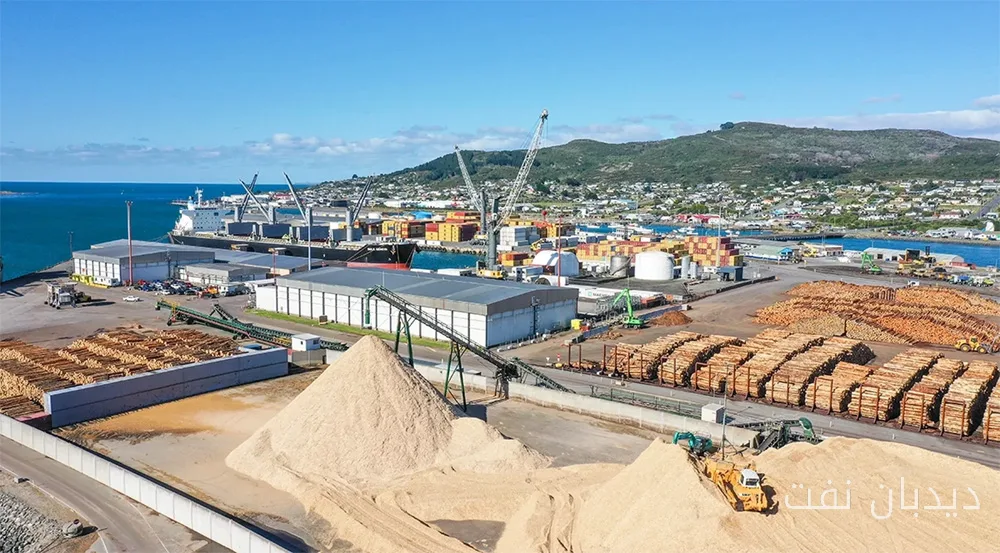
The New Zealand Transport Accident Investigation Commission (TAIC) has published a report on the explosion in the engine room of the oil tanker Olivia that occurred on May 24 last year at the South Port, Bluff. This incident caused serious injuries to three crew members who were cleaning the ship's boiler.
Details of the Incident and Conditions of Occurrence
According to the report, the crew was performing a task that they believed was familiar and simple, but the specific conditions under which the work was being done were overlooked. The 180-meter oil tanker Olivia, registered under the Maltese flag, had been undergoing extensive repairs in port for 32 days. Repeated attempts to ignite the boiler's burner had been unsuccessful, and on the day of the incident, the crew used an air lance, a long tube connected to a compressed air hose, to address the issue.
Read more: Fuel carriers in Kerman face serious dangers in the fuel smuggling route
Causes of the Explosion and Its Consequences
Investigations reveal that the boiler should have been completely isolated and confirmed to have reached a safe temperature before cleaning began. However, the crew's decision to blow compressed air into the hot boiler containing unburned fuel led to the explosion. Two crew members were hospitalized with serious burns, and another with bruising, but no damage was done to the ship.
The TAIC identified two safety issues in this incident. First, the inadequate implementation of the ship's safety management system, and second, the lack of guidance for crew management during intensive and prolonged work periods. Louise Cook, the head of accident investigations, stated that "long repair programs require continuous attention to workload, rest, and supervision."
The Fleet Management company has taken steps to improve procedures and protective equipment as well as crew training following this incident.
Read more: The Russian Ministry of Defense reported an attack on two oil tankers and logistics centers in Ukraine · Senator Richard Blumenthal criticized the owner of the Greek oil tanker for the Russian diesel cargo