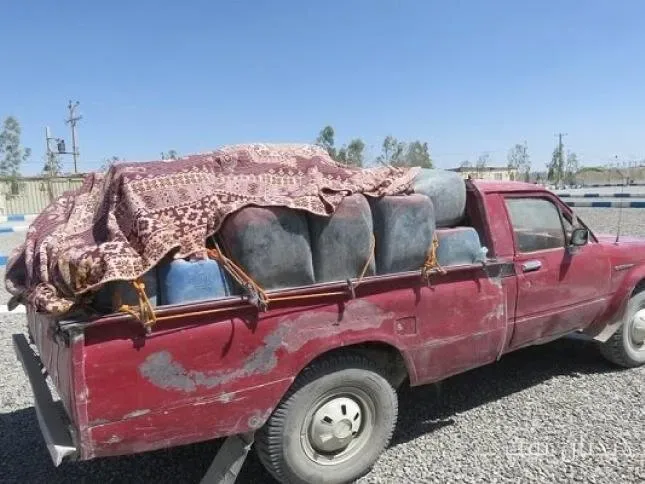
Sohail, a fuel carrier from the village of Rigan in Kerman province, has turned to this dangerous path since 2009 due to unemployment and lack of job opportunities. He says, "Despite working in this line since 2009, I still do not have a house of my own and live in my father's house."
Obstacles and challenges faced by fuel carriers
Sohail explains that his monthly income is only enough to cover his family's basic expenses. He carries about five barrels of fuel on each trip between the cities of Bam and Iranshahr, and if he avoids various dangers, such as theft and accidents, he earns around 10 million tomans. However, out of this, 150 million tomans will go to the lender, meaning the person who provided the fuel to him on credit.
Read more: Significant decrease in global piracy to the lowest level since 1992
He talks about the living conditions of himself and his family: "We have a few date palms, but due to water shortages, we cannot irrigate them and continue farming. I have no other job or income and am forced to transport fuel."
Deadly incidents and the bitter life of fuel carriers
Sohail points out the unfortunate incidents that occur to fuel carriers, saying, "Many people get into accidents while transporting fuel and lose their lives. They drive at high speeds to escape from thieves or authorities, and this increases the dangers of this job." He also mentions an incident where a 17-year-old boy died in a fire caused by an accident.
Sohail's wife also comments on the living conditions in the area, saying, "Our men turn to fuel transportation due to unemployment and lack of alternatives. No one wants to ride on a bomb and lose their life on this path."
She emphasizes that if there were other job opportunities, many fuel carriers would not be willing to continue this work. This issue highlights the critical economic situation in the region and the need to address the job and livelihood needs of its people.
Finally, Sohail mentions the severe dangers of this job and talks about his wife's companionship during fuel transportation trips: "She says she doesn't want to leave me alone on the road; if we are to die, let's go together and die together."
Read more: Joint management plan for the Strait of Hormuz proposed by Tarek M. Youssef and Paul D. Dyer · Discovery of 60,000 liters of smuggled diesel in Ahvaz by Khuzestan police