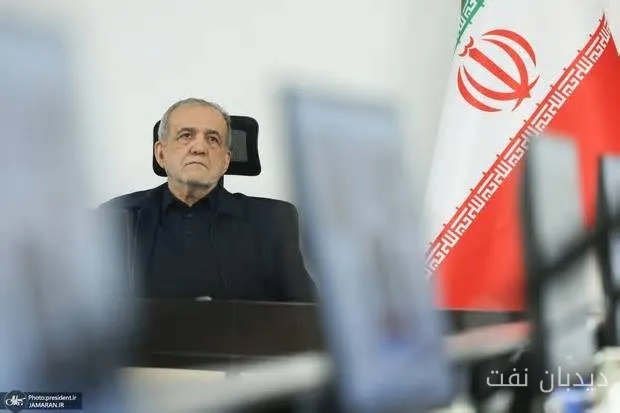
Masoud Pezeshkian's government, after two years since its inception, is facing serious challenges in fulfilling electoral promises. The gap between promises and decision-making is an issue that has affected the political capital of this government and has raised questions about its governance capacity and executive ability.
Political and Social Challenges
In politics, there is a gap between "promise" and "decision" that is sometimes more significant than the gap between decision and implementation. After winning the election, the president faces a society that voted based on his promises. From this moment, the main issue is not the ability to talk about change, but the ability to turn promises into policy and decisions into implementation.
Read more: Iran's protest against the U.S. membership in the Atomic Energy Agency's Board of Governors
Pezeshkian's government is faced with three major promises in the political, social, and legal spheres, including lifting the house arrest of Mir Hossein Mousavi, changing filtering policies, and providing legal means for issuing motorcycle licenses for women. Each of these issues represents the government's relationship with societal demands and its capacity to politically respond to these demands.
Political Capital and Governance Capacity
The important question is, if a promise has been made in an area that requires agreement among multiple institutions, how much political capital and negotiation power has the president utilized to build that agreement after winning? Given Mir Hossein Mousavi's age, if something happens to him, what crisis will the system face?
The issue of lifting the house arrest of Mir Hossein Mousavi and Zahra Rahnavard, who have been under house arrest since February 2011, remains in a similar situation. The president does not have absolute authority to make decisions in this regard, and this limitation raises important questions for the government. Do the president and senior officials not realize that lifting the house arrest could help with cohesion and unity within the system?
Ultimately, the concept of "governance capacity" becomes significant. The capacity of the government is not limited to the number of ministries and legal powers; it also depends on its ability to build coalitions among various institutions and persuade society. If the government can transform issues from slogans to legal processes, even sensitive social topics can become public policy.
Read more: Pakistan rejects India's "aggressive" action after naval collisions · Masoud Pezeshkian's order for remote work in offices due to fuel shortages