The Iranian automotive industry is in a position where policymaker decisions regarding production, imports, technology, energy, and market regulation have a greater impact on the future of this industry than ever before. On one hand, automakers and parts manufacturers face multiple challenges in developing production and maintaining domestic manufacturing capabilities, while on the other hand, the automotive market requires policies that simultaneously consider the interests of both producers and consumers.
Lack of a Clear Roadmap
In this context, the absence of a clear and long-term roadmap for the automotive industry has led to some decisions in this area being made sporadically and separately; a situation that could complicate the development of this industry further. Alongside these issues, the shift towards electric vehicles and alternative fuels, the manner of supporting domestic production, the relationship between automakers and parts manufacturers, and the implementation of privatization are among the most important topics that will affect the future of the automotive industry.
Need for an Integrated Policy
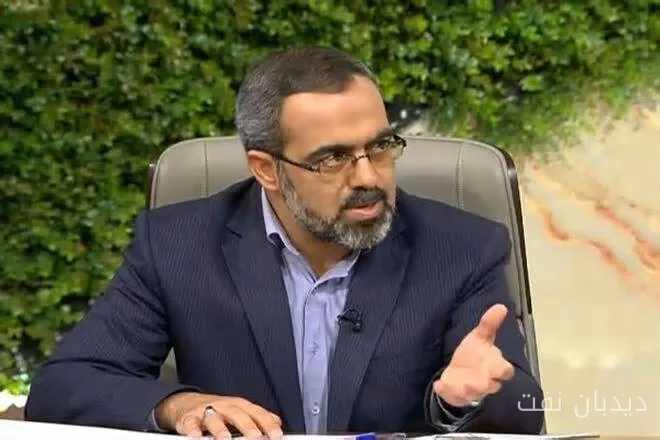
It seems that overcoming the current situation requires an integrated policy that views all components of the automotive chain together and has a clear plan for them. In this regard, we had an exclusive conversation with “Rouhollah Izadkhah,” a member of the Economic Commission of the Islamic Consultative Assembly, on the sidelines of the seventh Tehran Auto Show.
Izadkhah pointed to the challenges of car import tariffs and said: "Tariffs should not be viewed in a binary way; saying we agree or disagree with any tariff is not an accurate perspective. If the tariff is purposeful and it is clear what policy it is imposed for, it can be beneficial; however, if it is non-purposeful, it can really harm the industry and the market."
He also added: "If the aim of imposing tariffs is to implement a specific industrial policy such as localization and enhancing the domestic supply chain, it can be discussed, but if tariffing merely means the continuation of monopolies, then it is naturally not the right decision."
Development of Electric Vehicles
Furthermore, Izadkhah referred to electric and hybrid vehicles and said: "In the seventh development plan, a clear obligation has been set for this issue. We have mandated the government to supply 200,000 electric vehicles to the market annually. This supply can be achieved through domestic production or imports."
He emphasized: "The shift towards electric vehicles is a legal obligation, and we must see what plan the government has for implementing this obligation. Naturally, its execution requires a set of infrastructure, incentives, and coordinated policies, and one cannot expect the electric vehicle market to develop solely based on a decision regarding imports or tariffs."
Challenges in Policymaking
Izadkhah continued to point out the challenges in policymaking and said: "My criticism is directed at the entire government and does not only include the Ministry of Industry, Mine and Trade. Automotive manufacturing is not solely the concern of the Ministry of Industry. The Ministry of Economy, the Ministry of Oil, and some organizations and government agencies are also involved in this industry."
He added: "A coherent industrial policy for important and priority sectors of the country must be formulated within the government. The seventh plan also emphasizes the formulation of industrial policies in important and priority sectors, but we have not yet seen tangible and clear results from this in the automotive industry."
Izadkhah stressed: "This policy must be tangible and concrete and should at least cover a horizon of five to ten years. If we consider the horizon of the seventh plan, we should at least have a clear path for the next five years."
Read more: Taybad Governor: Controlling Fuel Smuggling at the Dogharoun Border Using Existing Capacities · Increasing the Share of Students in Non-Governmental Schools to 15% in Iran