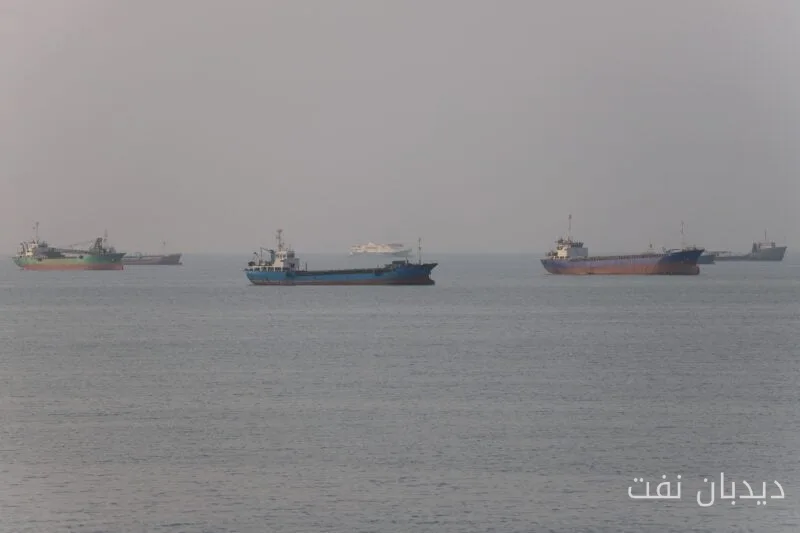
Tankers are facing increased risks of attacks and threats in the Strait of Hormuz. Iran has recently announced that it will block unauthorized routes. These developments come after the number of attacks on tankers in this vital waterway reached its highest level since the start of the Iran war last week, and the number of ships attempting to pass through this strait has dropped to its lowest level in over two months.
New Threats from Iran
Iran has warned regional countries that any attempt to open new routes for oil exports will be considered a hostile act. This action is part of a plan agreed upon by Iran's political leaders and the Islamic Revolutionary Guard Corps. A senior diplomat in the region quoted Tehran as saying: "Iran has no intention of losing control over the Strait of Hormuz and has plans to block the oil export routes of some regional countries."
Read more: Saudi Arabia's Zamil Offshore Signs Contract with KonoShip for Diving Support Vessel Design
Consequences of Recent Attacks
In the past 24 hours, a chemical tanker flying the flag of Antigua and Barbuda named Acers was attacked 51 nautical miles off the coast of Qatar. These attacks are particularly concerning as they indicate a potential increase in the war zone around Qatar, Bahrain, Saudi Arabia, Kuwait, and Iraq. This situation may lead to heightened tensions in the global oil market and rising prices.
Maritime fleet managers and security analysts have stated that Iran's threats have significantly affected ship owners' willingness to pass through the Strait of Hormuz. A senior security official in this regard said: "Recent Iranian attacks have clearly reduced ship owners' willingness to transit this waterway."
Meanwhile, the President of the United States is considering next steps against Iran, including increasing attacks, before or after the November midterm elections. This war and its monthly cost of $3 billion have become one of the key issues in election campaigns. Governments and energy companies have utilized their reserves to alleviate pressure in the global oil market. Given the ongoing crises, oil inventories available for the global market are decreasing.
Read more: EnerMech Signs Pre-Commissioning Services Contract with Subsea7 in Trinidad and Tobago · Attack on Acers Tanker Near Qatar, Escalation of Maritime Conflicts in the Persian Gulf



