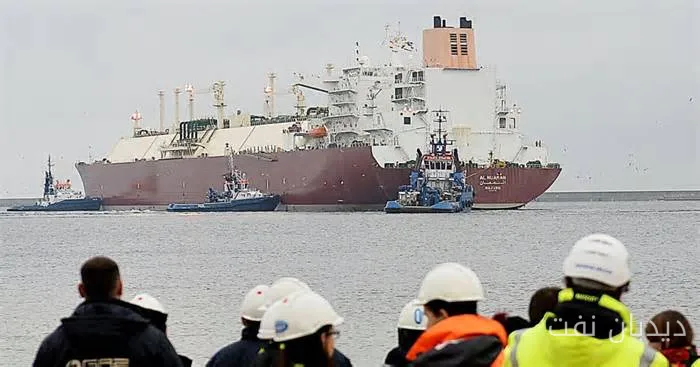
More liquefied gas carriers associated with Qatar passed through the Strait of Hormuz last week. Despite ongoing clashes between the United States and the Islamic Republic, the traffic of tankers through this strait, which had previously been halted due to concerns about attacks from the Islamic Republic, has clearly increased.
Traffic Halt and Its Reasons
According to data from Kpler, there was no observable traffic from vessels associated with Qatar or carrying cargo from the Ras Laffan gas terminal in August. This halt was due to concerns about attacks from the Islamic Republic and its efforts to control traffic through the Strait of Hormuz, which is considered one of the most important energy transit points in the world.
Read more: Destination of Three Hijacked Iranian Tankers to Texas Revealed
While some vessels may have passed through the strait by turning off their transmitters, recent data indicates an increase in the traffic of liquefied gas tankers this month. This increase in traffic may signify a reduction in concerns stemming from security threats.
Recent Examples of Tanker Traffic
The most recent example is a vessel that was observed on October 5 with a cargo from Ras Laffan near Sri Lanka. This vessel, managed by a Greek company, has been transporting cargo from Qatar to the UAE and Kuwait since the onset of conflicts in the Persian Gulf.
Additionally, at least five other vessels associated with Qatar have exited the Persian Gulf in the past two weeks. One of these vessels delivered its cargo in India on October 2, while another headed towards China with a cargo. Furthermore, a vessel managed by a Chinese company also passed through the strait on September 28 and delivered its cargo to Pakistan.
Meanwhile, the Qatari vessel Al-Mufir also entered the Strait of Hormuz last week. This vessel, which was seen outside Hormuz on September 28, entered the strait without cargo on September 31.
Background and Importance of the Strait of Hormuz
Before the blockade, the Strait of Hormuz was one of the most important energy transit routes in the world, transporting one-fifth of the global supply of crude oil and liquefied gas. In this strait, many vessels pass through by turning off their automatic identification systems and with the support of the U.S. military to avoid detection.
The increase in tanker traffic seems to be a sign of a change in the security situation in the region. If this trend continues, we may witness further increases in trade and economic flows in the region, which could have significant impacts on the global energy market.
Read more: Omid Shakri: Supplying Feedstock for Petrochemicals Will Be More Difficult This Winter · Three Iranian Tankers Heading Towards the Shores of America



