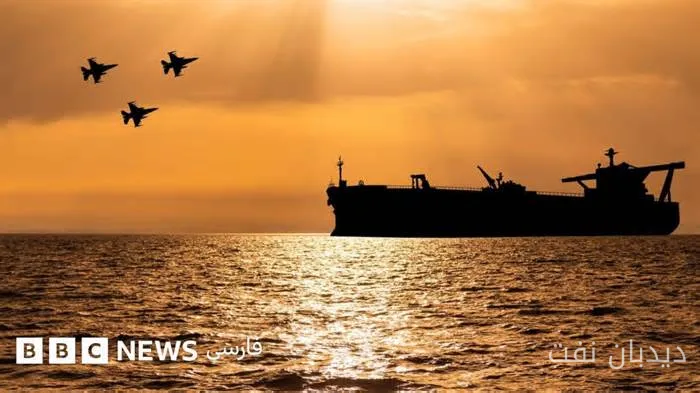
The increase in oil exports from the Arab Gulf countries to pre-war levels comes at a time when Iran's oil exports have dropped to nearly zero due to U.S. sanctions and maritime blockade. According to a report by Kepler, from September 1 to 28, 2023, at least 16.5 million barrels of crude oil and condensate were exported from the region daily, of which 9.9 million barrels, equivalent to 60 percent, passed through the Strait of Hormuz.
Developments in Oil Exports in the Gulf
These developments occur as Tehran has attempted to leverage the threat to shipping in the Strait of Hormuz as one of its tools since the beginning of the recent war. However, the increase in exports from neighboring countries has taken place while Iranian officials have threatened that halting Iran's crude oil exports would also prevent exports from other countries. However, investigations indicate that this threat seems to have become ineffective.
Read more: Yongzi Jiang Maritime has registered an order for 6 LR2 tankers in China
Kepler has also estimated that the passage of Iranian oil through Hormuz in September has dropped to nearly zero following the return of the blockade in July. Before the war, Iran was exporting about 1.7 million barrels of oil daily, and considering its share, the region's exports in September reach about 91 percent of pre-war levels.
The Role of the United States and Changes in the Strait of Hormuz
Observers consider the role of the U.S. Air and Naval Forces as one of the main reasons for the increase in tanker traffic in the Strait of Hormuz. U.S. air support includes issuing warnings and intercepting incoming threats such as drones and missiles. However, ships passing through the southern route proposed by the U.S. near the coast of Oman continue to be targeted by attacks.
In this context, reports of attacks on tankers have also emerged. The UK Maritime Trade Operations (UKMTO) has reported an unidentified projectile hitting a tanker and a fire on a cargo ship during this period. These incidents indicate that vessels remain at risk, although the intensity of attacks may not have changed compared to the past.
With the launch of shuttle tanker networks, the possibility of travel between Gulf ports and transshipment points outside the Strait has been established. These vessels deliver oil outside of Hormuz to other tankers that take a longer route to consumer markets. According to reports, over 70 percent of crude oil passing through Hormuz has been transferred from one ship to another near Fujairah.
Hamidreza Azizi, a senior analyst on Iran at the International Crisis Group, emphasizes that the combination of the UAE's economic initiative with U.S. military and operational actions has complicated Iran's strategy to disrupt the Strait. This situation, along with high trade costs, raises questions about the sustainability of these arrangements and the future of oil exports in the region.
Read more: TGS has new advancements in oil exploration projects in Malaysia and Gabon · Petrobras discovered a new oil layer in block FZA-M-59 located off the coast of Amapá



