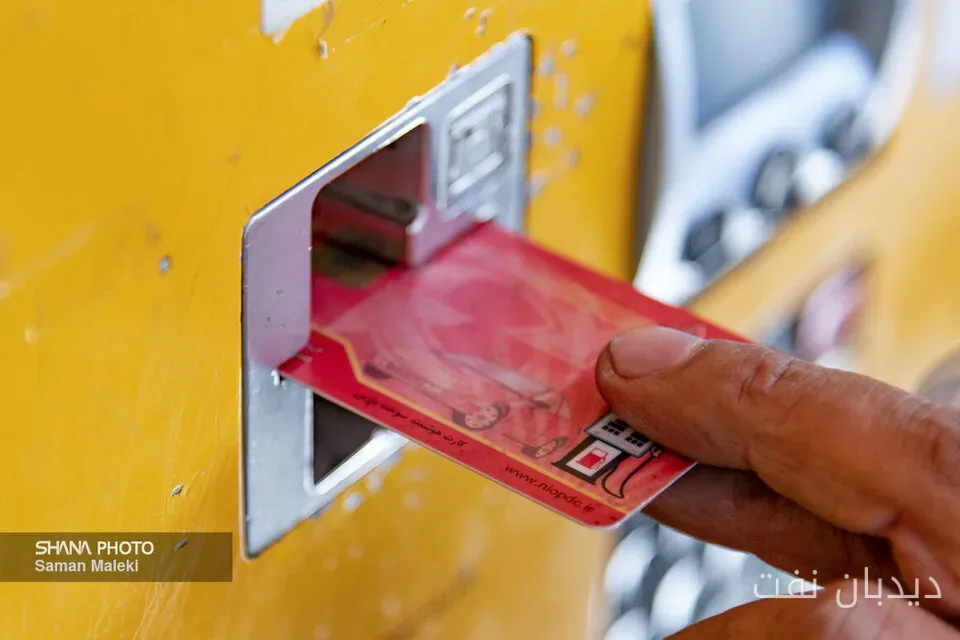
The National Oil Products Distribution Company implemented the fuel card coding plan on Thursday, November 7, in four border counties: Nehbandan, Sarbisheh, Darmian, and Zirkuh. This plan aims to combat fuel smuggling, control off-network supply, organize the distribution of oil products, and reduce the use of emergency cards at fuel stations.
Details and Requirements of the Coding Plan
According to the National Oil Products Distribution Company of the South Khorasan region, refueling at the stations in these four counties is available for local vehicles of the province as well as non-local vehicles with a history of refueling in South Khorasan, provided that the residence of their owners in this province is verified. This action is taken due to the extensive common border of South Khorasan with Afghanistan, the price difference of fuel with neighboring countries, and the activities of illegal oil product transfer networks.
Read more: Missile attack on the Ras Tanura refinery in Saudi Arabia on October 27
Consequences of Fuel Smuggling
Fuel smuggling not only imposes economic damage and drains subsidy resources from the official distribution network but also poses dangerous consequences for road safety and the health of citizens. The activities of vehicles known as 'shooti' and the illegal transport of gasoline and diesel have repeatedly led to traffic accidents, fires, and human casualties. The incident that occurred on November 2 on the Hosseinabad-Nehandan route resulted in the death of one person and injuries to two others due to a collision between two Peugeot 405 vehicles carrying smuggled fuel.
Smart control of refueling and identification of illegal supply routes can be one of the tools for managing consumption and protecting national resources. However, its effectiveness depends on the implementation method and the extent of monitoring infrastructure coverage. The implementation of the coding plan faced issues from the early days, and reports of disruptions in refueling for some local vehicles belonging to residents of Nehbandan were published. These problems have been attributed to the loading of new information, and the National Oil Products Distribution Company has announced that it is pursuing solutions to resolve the disruptions.
Challenges and Expectations from the Coding Plan
In border areas like Nehbandan and Sarbisheh, the dispersion of villages and the great distance of residences from urban centers have increased people's dependence on personal vehicles. This dependence is essential for accessing healthcare, education, administrative, and economic services, and any disruption in access to gasoline can exacerbate their daily problems. One of the most important ambiguities in the implementation of the plan is the status of non-local vehicles, travelers, passing drivers, and transport operators who may not have a history of refueling in South Khorasan.
Designating specific stations for emergency refueling can address part of this need. It is necessary to transparently inform the number of eligible stations, usage conditions, the amount of fuel available, and how to access them. Additionally, anticipating a mechanism for registering requests and lifting restrictions on vehicles that have not been identified in the system for various reasons can prevent dissatisfaction and disruptions in essential travel.
The implementation of the coding plan continues the policies for managing fuel consumption in South Khorasan. Previously, the fuel consumption management plan had started at the beginning of October in this province, and its results indicate a 9% reduction in gasoline consumption in the first 20 days of October compared to the same period in September. However, evaluating the performance of new policies should not be based solely on the decline in gasoline consumption, but also on the extent of reduced smuggling, limiting off-network supply, and maintaining the sustainability of fuel delivery to authorized vehicles.
Ultimately, the successful implementation of the coding plan in the four border counties of South Khorasan has become a test for the government's policies in the area of fuel consumption management and combating the smuggling of oil products. It is expected that the governors of the relevant counties will continuously oversee the implementation of the plan and address potential issues.
Read more: The U.S. restored oil exports from the Strait of Hormuz to 80% of pre-war levels · U.S. nighttime operations to protect ships in the Strait of Hormuz