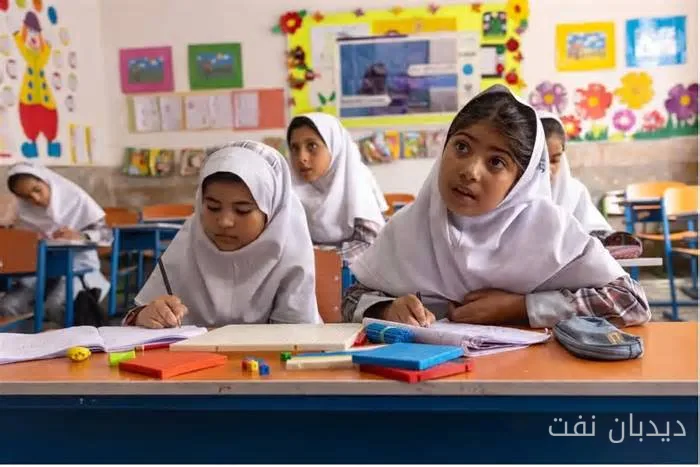
The Deputy of Primary Education at the Ministry of Education announced that this ministry is responsible for making decisions regarding school closures, stating: with this delegation of authority, instead of nationwide closures, decisions can be made according to the conditions of each region.
The Importance of Instruction Time and the Impact of School Closures
Rezvan Hakimzadeh, in a news interview, emphasized the importance of preserving students' instruction time and added: instruction time in our country is significantly less compared to many other countries. He stated that this issue affects students' learning outcomes and that educational conditions should be compared with those of other countries.
Read more: Delegation of authority for school closures to the Ministry of Education
Hakimzadeh, while referring to school closures for various reasons including air pollution and snowfall, said: "Every time for any excuse, the first place we close is school." He emphasized that these decisions are not necessarily beneficial and can harm students' instruction and learning time.
Management of School Closures and Energy Imbalance
He also referred to a research report that examined various factors leading to school closures. This report indicated that school closures do not significantly reduce energy imbalance. Hakimzadeh added: "Such decisions should be made with greater caution."
The Deputy of Primary Education at the Ministry of Education also referred to the standards for school closures in conditions of air pollution, stating: "In many countries, even when the level of air pollution exceeds permissible limits, schools continue their activities." Meanwhile, in Iran, there is a rapid move towards closing schools.
Hakimzadeh also emphasized the necessity of cultural change to reduce school closures, stating: "If we provide the necessary education and reconsider our consumption behavior, we might be able to significantly prevent school closures."
He pointed out that during the COVID-19 pandemic, Iran was one of the countries with the longest duration of school closures, which harmed the education of a generation. He noted that better decisions regarding school closures should be made to ultimately create opportunities for compensating and increasing students' instructional days.
Read more: The Iran-Oman meeting was canceled at the request of Saudi Arabia · Semnan Province is required to reduce energy consumption by 25%