China has recently upgraded the signal communications suite of its naval base for the People's Liberation Army Navy in Djibouti. A comprehensive report prepared by the Center for Strategic and International Studies describes the changes made at this base.
Details of the Upgrade at the Naval Base
The Chinese Navy's foreign support base in Doraleh, Djibouti, is China's only confirmed foreign base, but it was expected to be the first of several similar bases globally under the classified project 141. The Ream base in Cambodia is the second of its kind, but its status, along with Chinese facilities in Hambantota, Sri Lanka, now resembles more of a facility for visiting ships. Plans for a base at KIZAD port in Abu Dhabi appear to have been canceled under pressure from the United States.
Read more: Content of the US inspection report on 'Operation Epic Fury' released
China's Intelligence Objectives in Djibouti
The improvements made to the communication facilities at the Doraleh base include antennas and satellite dishes across the entire electromagnetic spectrum from high frequencies, very high and ultra-high frequencies, satellite communications, and 5G. Although it is unclear whether these antennas are for sending or receiving signals, it appears that these new arrays are designed for passive signal collection. The Chinese Navy has been operating naval escort groups in this area since 2008 and has required sufficient secure communications.
From Doraleh, the Chinese Navy can monitor the activities of many foreign naval bases in Djibouti and also stay informed about ongoing conflicts in Yemen, Sudan, and Somalia. This force is also significantly interested in the substantial presence of the US Navy in the Arabian Sea and monitoring commercial traffic in the Red Sea.
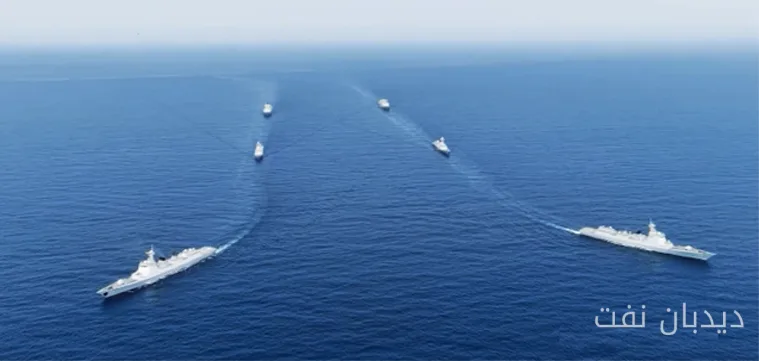
The Chinese Navy maintains a fleet of three ships in Djibouti that rotates every 10 months. The escort group 48, consisting of the guided-missile destroyer Tangshan (F122), the guided-missile frigate Daqing (F576), and the supply ship Taihu (K889), completed its tour on September 5 and is returning home. The fleet is currently in Chattogram port for a five-day friendly visit to Bangladesh.
Read more: Decrease in ship traffic in the Strait of Hormuz to four cases per day · China, battery revolution in shipping with 89 new ships