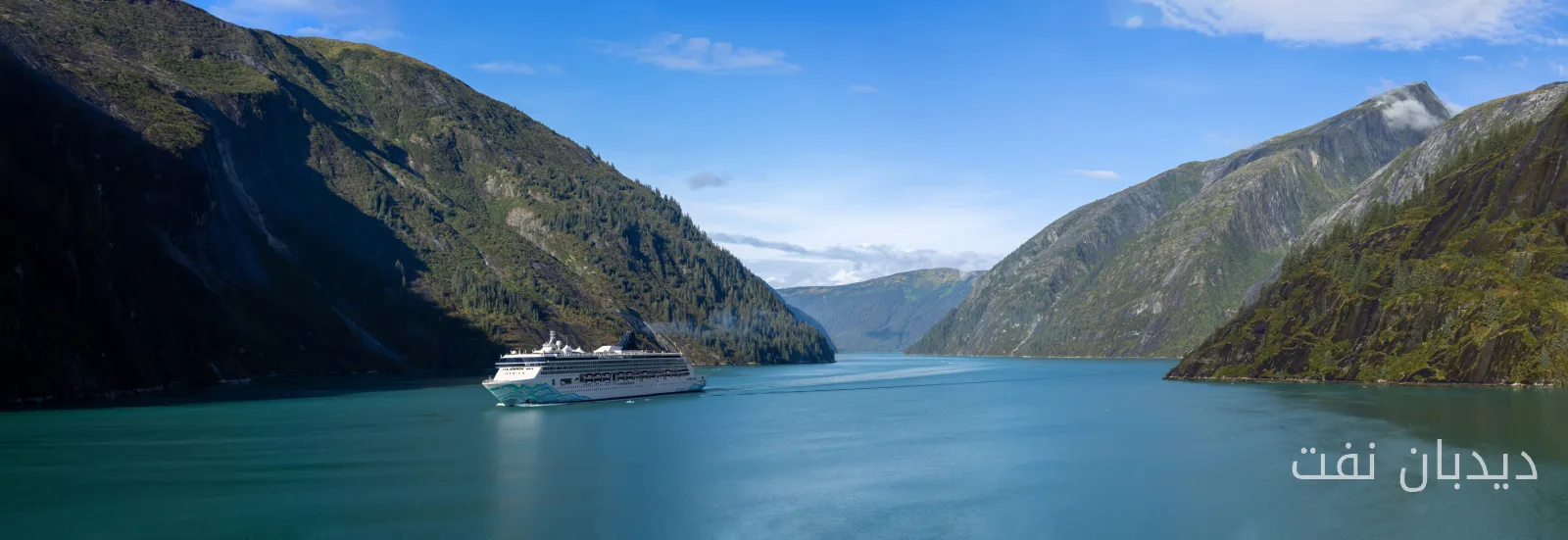
The analysis of the costs of the green methanol cruise corridor in Alaska estimates the necessary expenses to launch this project at $1.4 billion. This study, which examines the feasibility of shipping with green methanol vessels, shows that passengers will have to pay additional costs to use these services.
Details of the Green Corridor Project
In 2022, 15 organizations with direct interests in shipping on this route initiated the green corridor project in the Northwest Pacific leading to Alaska. The main goal of this group of "pioneers" was to explore the possibility of creating the world's first green cruise corridor, achieved by accelerating the deployment of low and zero greenhouse gas-emitting vessels.
Read more: The EU's new strategy emphasizes maritime security and underwater cables in the Arctic
Financial and Economic Challenges
A study conducted by the Meyer Sk McKinney Muller Center for Carbon-Free Transportation concluded that while the green methanol corridor may be technically and regulatory feasible, it faces significant financial challenges. To make this project economically viable, the $1.4 billion cost gap must be filled to support corridor operations over 25 years.
This corridor requires a market willing to pay green costs for low-carbon transportation. For the corridor to be viable, passengers must be willing to pay an additional fee ranging from $360 to $480 per cruise. With optimal financing and the adoption of the IMO carbon-neutral framework regulations, this cost may be reduced to $185 to $280.
If NZF regulations are not considered and only optimal financing is taken into account, passengers would need to pay between $310 and $405. Therefore, this project still faces economic challenges in achieving feasibility.
In addition to financial challenges, the corridor also faces other issues. In particular, there is still a need to address existing gaps in fuel supply and regional infrastructure. Developments in U.S. policies have also added uncertainties, and while there was planning for investment in establishing a green methanol production unit in the U.S., the shift in the Trump administration's stance on alternative fuels has changed the dynamics.
This study is based on a scenario where four cruise ships make 20 round trips in a season, fueling in Seattle or Vancouver. For this route, 120,000 tons of green methanol will be needed annually. Thus, it becomes possible for about 320,000 passengers to participate in low-emission cruises, reducing 224,000 tons of CO2e each season.
Over the 25-year lifespan of this corridor, a total of 5.6 million tons of CO2e will be reduced by four cruise ships operating on the Alaska route with green methanol.
This study has enhanced the port's understanding of the requirements for producing, delivering, and supplying green methanol fuel in cruise ships on this route. The Port of Seattle will use these findings to explore sustainable marine fuel pathways in the Northwest Pacific.
Read more: The second specialized meeting of the country's general managers of civil defense began in Yazd · Taiwan plans to invest $4.4 billion in the Alaska LNG project