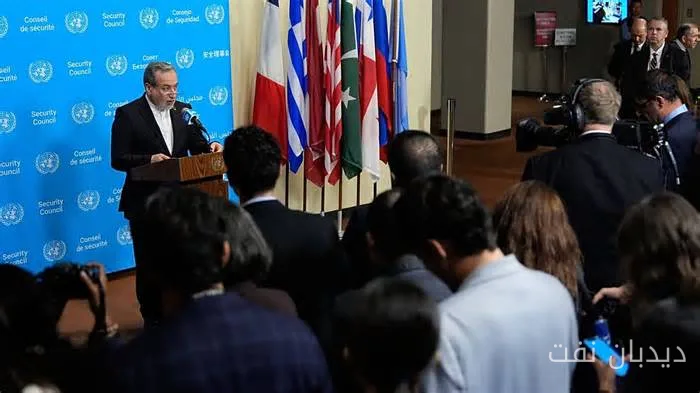
Abbas Araghchi, the Foreign Minister of the Islamic Republic of Iran, on Friday discussed the possibility of reopening the Strait of Hormuz and emphasized that this decision depends on the actions of the United States. Araghchi referred to a memorandum of understanding signed between Iran and the U.S. in June, stating, "The actions that the U.S. must take are not new and all of them are included in the memorandum."
Conditions for Reopening the Strait of Hormuz
Araghchi further clarified: "If the American side is serious about reaching an agreement and reopening the Strait of Hormuz, everything is ready now." He also noted that the seven-day timeline of Iran's proposed plan will begin as soon as the U.S. agrees. Araghchi said: "Completing the initial steps will take four to five days, and on the sixth day, the Strait of Hormuz will be reopened."
Read more: Araghchi explained the details of the seven-day plan to reopen the Strait of Hormuz
Iran's Proposal to the United States
According to the statements of Iran's Foreign Minister, if the United States lifts the maritime blockade of Iranian ports and cancels the sanctions on the country's oil sales, Tehran is ready to observe a ceasefire that also includes Lebanon. He added: "On the seventh day, talks with the U.S. will begin to reach a final agreement on the agreed-upon issues of both sides."
This proposed plan by Iran is very similar to the memorandum of understanding from June, but its timeline is more compressed. The June memorandum had anticipated a temporary 60-day period. An American official familiar with the discussions between Tehran and Washington stated that the U.S. government is conducting positive and constructive talks through intermediaries, but will not rush to reach an agreement.
Additionally, Ali Vaez, the Iran program director at the International Crisis Group, said: "This is a clever move. They know that this proposal is very tempting for President Trump, as it ends an unpopular war and lowers energy prices ahead of the midterm elections."
Diplomatic Movements and Differences of Opinion
In line with efforts to resume diplomacy, Masoud Pezeshkian, the President of Iran, said in his speech at the United Nations General Assembly on Wednesday that Iran is not afraid of continuing the war and is still ready for diplomacy. In the latest sign of diplomatic movement, Mr. Pezeshkian hosted Mohammed bin Abdulrahman Al Thani, the Prime Minister and Foreign Minister of Qatar, on Friday morning. Qatar played a mediating role during the discussions between Iran and the U.S. that took place earlier this week on the sidelines of the UN General Assembly between Araghchi and American representatives.
However, at the same time, signs of disagreement within Iran's leadership are also evident. Ebrahim Rezaei, a member of the Islamic Consultative Assembly, criticized diplomatic policies on social media and emphasized that the Foreign Ministry should be an executor, not a policymaker. He added: "Iran's conditions have been communicated to the U.S., and meeting illegally under the pretext of conditions only signals weakness."
Ultimately, these developments reflect Iran's efforts to improve diplomatic relations and reduce tensions with the United States, while internal disagreements within the leadership are also on the rise.
Read more: Taiwan increases its maritime patrol capacity around the Pras Islands · Washington is seizing 4 million barrels of Iranian oil from the Tiffany and Majestic X tankers



