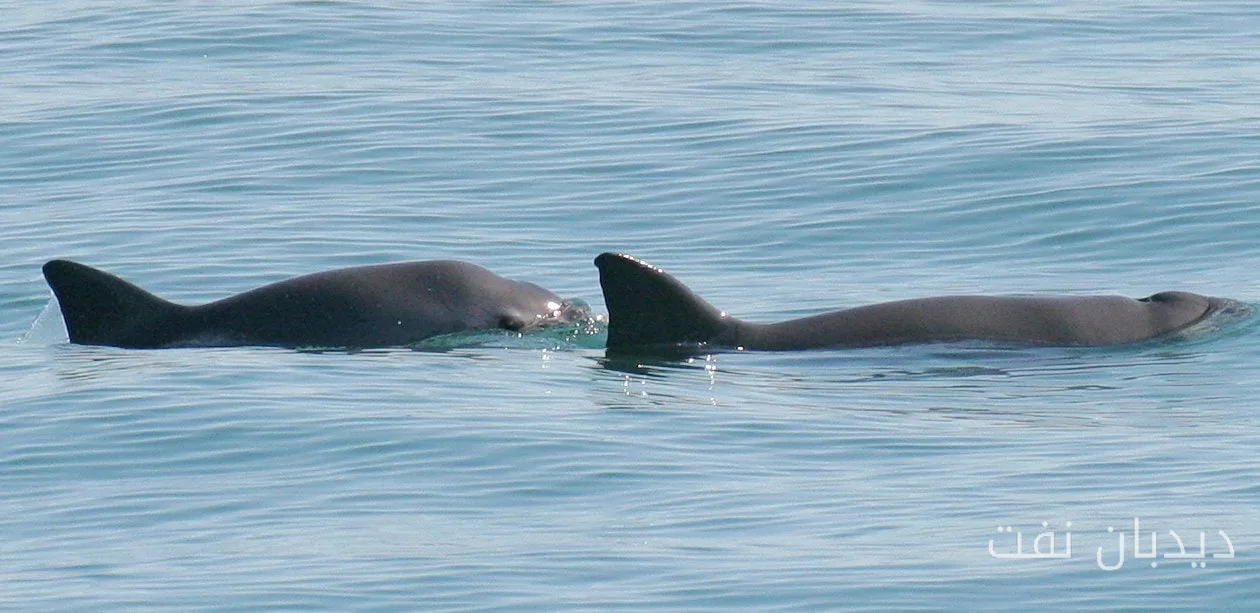
The President of Mexico, Claudia Sheinbaum, announced on October 18 that the drastic reduction in the protected area for the vaquita, the world's smallest whale, will lead to economic benefits for fishing communities. This reduction has reached 86%, bringing the area down to 1,562 square kilometers (603 square miles), which is roughly the size of Greater London.
Background on Vaquita Conservation
The previous area designated for the protection of this marine species was nearly the size of the state of Connecticut in the United States. Critics argue that this reduction in no-take zones for gillnet fishing harms the survival of this endangered species. The vaquita lives in the Gulf of California, and its population is currently estimated to be between 7 to 10 individuals, including at least one calf.
Read more: Pollution from the Bazan refinery led to the closure of schools in Haifa
Response to Criticism and Proposed Solutions
Sheinbaum stated that the aim of this change is to protect biodiversity in the Gulf of California while allowing fishermen to earn better incomes. Officials have said that this action was taken considering the recommendations of the International Committee for the Recovery of the Vaquita, which is a governmental advisory body. Lorenzo Rojas-Bracho, a marine biologist and leading expert on the vaquita, expressed hope that with the reduction in the size of the protected area, efforts to save this mammal would become more focused.
Rojas-Bracho said, "Enforcing a ban in a very large area is difficult because it includes vast areas with no new records of vaquitas. If you lose a ring, you don’t search your entire house, but focus on the place where you lost it." He also stated that if no more vaquitas are killed, the remaining individuals have a good chance of the species recovering.
However, Rojas-Bracho emphasized the need for increased monitoring of fishing boats and the use of alternative methods that do not put the vaquita at risk. Gerardo Sabaios, a biologist at the National Autonomous University of Mexico, also added that allowing the vaquita to go extinct would mean a moral failure.
He said, "What is happening to the vaquita is a predetermined death. We have reduced the vaquita protected area without having the appropriate technical or logistical capacity to enforce the laws and are yielding to the pressure of interest groups to extract a larger area." Sabaios emphasized that very little investment from the government could ensure the protection of the vaquita, but under the current circumstances, he believes that this whale is on the path to extinction.
He also added, "If the vaquita goes extinct, it will not solve either security or local poverty, and Mexico will lose a symbol. If actions are taken, there is a chance and hope, and we must continue to work with hope."
Read more: SATBA introduced three green areas with 100% electricity supply from solar energy · ScottishPower Renewables completed record-breaking cable shipment for East Anglia Two wind farm