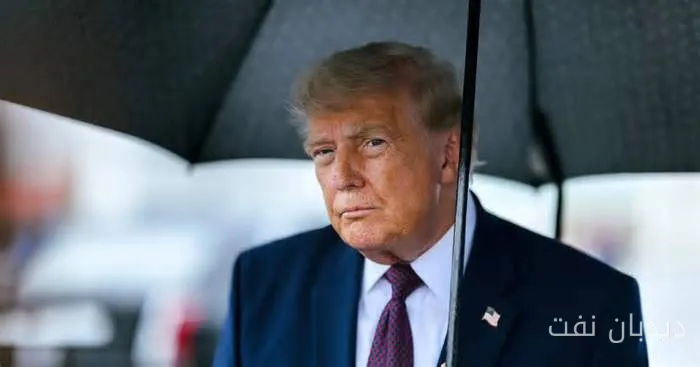
The U.S. government announced that last week, more than 20 million barrels of oil passed through the Strait of Hormuz. This amount of oil is even higher than the levels before the war began. Donald Trump, the President of the United States, stated in an interview with Fox News that this figure indicates a revival of oil, gas, and petroleum product transfers from this waterway.
The Strait of Hormuz and Its Importance
The Strait of Hormuz is a narrow passage between Iran and Oman that, before the war began on February 28, 2025, transported an average of about 20 million barrels of oil per day. This amount constitutes about one-fifth of the world's oil supply. According to Trump, this increase in oil passage is due to the actions of U.S. armed forces to maintain the security of energy transfer routes.
Read more: Joint plan of three oil giants to transfer Caspian Sea gas to Turkey
The Islamic Republic of Iran proposed on September 25 a plan to lift the maritime blockade and issue a sanctions exemption for oil sales. This proposal also includes establishing a ceasefire in Lebanon. However, Trump stated that he would not accept this proposal and emphasized economic pressure on Iran.
Challenges for Refineries and Energy Prices
The U.S. Energy Secretary, in the continuation of his interview, referred to the challenges in the refining industry and stated that the current pressure on energy prices is more due to a lack of refining capacity in the world than from oil transfer restrictions. He also added that Russia's refining capacity has significantly decreased, and part of the refining capacity in the Middle East has also been taken offline.
Wright also mentioned criticisms of Joe Biden's administration policies and referred to the closure of more than 12 refineries during his presidency. He said that the current administration is trying to establish the first new refinery in the U.S. in several decades.
Trump has also asked Ukraine to stop attacks on Russian refineries, while rising fuel prices ahead of the midterm elections have put pressure on Republicans.
Future Directions of U.S. Energy
The U.S. Energy Secretary emphasized the importance of increasing energy production for the economic and industrial advancement of the country and stressed the necessity of expanding electricity production capacity. He stated that the U.S. has not only achieved energy independence but has also become one of the largest net energy exporters in the world.
Wright also pointed to the challenges posed by the Houthis in Yemen for the security of energy transfer routes. Increased tensions in this region and attacks on Saudi Arabia have heightened concerns about the security of the global oil market.
Finally, the U.S. Energy Secretary called for more cooperation with Venezuela, stating that the goal is to turn this country into one of Washington's allies. He added that increasing oil production in Venezuela could provide new investment opportunities for American companies.
Read more: Iran presented a plan to reopen the Strait of Hormuz to the U.S. · New Iranian oil tanker shipment under sanctions on its way to the Persian Gulf



