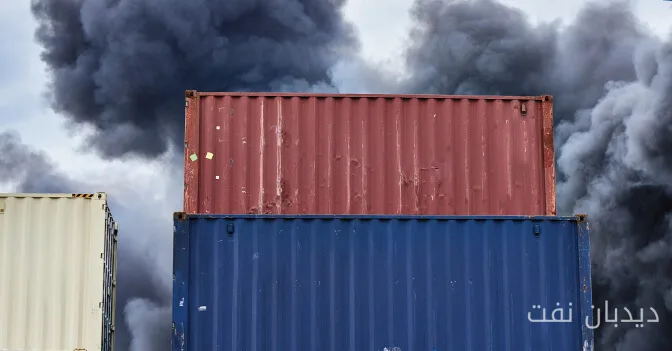
A new report from the UCL Energy Institute indicates that the shipping industry is unlikely to meet the 2030 targets related to alternative fuels. This report, titled "Climate Performance in Shipping: Progress Towards Breaking the 2030 Barriers," highlights the legal uncertainties associated with the International Maritime Organization's (IMO) Net-Zero framework.
Failure to Achieve Zero Emission Fuel Targets
According to the report, the set targets for having zero-emission fuels making up 5 to 10 percent of total fuel consumption are unlikely to be achieved. The ultimate goal is for the shipping industry to reach a carbon-neutral status by 2050, with the 2030 target seen as a catalyst for early advancements.
Read more: Hedayatollah Khademi: Iran Faces a Shortage of 400 Million Cubic Meters of Gas
Factors Influencing Delays in Progress
Analyses show that due to economic and political crises, including the Strait of Hormuz crisis and energy security and supply chain concerns, the world is falling behind in achieving alternative fuel targets. For instance, the goal of having 100 large vessels with a capacity of 15,000 TEU (Twenty-foot Equivalent Units) operating on zero-emission fuels by 2025 was not met.
Although the industry faces challenges, there are also advancements in alternative fuels and technologies. The number of ports offering methanol fuel has increased to 29, and successful sea trials have been conducted with the first large ammonia-fueled vessels.
Financial Outlook and Legal Challenges
The financial status of the industry is also variable; in 2025, about $3 billion was issued to transportation-related entities through green loans and green bonds, which is a significant decrease from the previous year. As issues related to the Net-Zero framework have been one of the biggest obstacles to the 2030 targets, legal uncertainties are recognized as a major barrier.
Pinar Langer, a researcher at the UCL Energy Institute, stated that the lack of approval for the Net-Zero framework is one of the most significant negative factors in this five-year period, and there is a need for legal clarity and more assurances for shipowners to get back on the right track.
Read more: Daily Increase of 25 Million Liters of Fuel Smuggling in Iran · South Korea Launches New Financing Program for Polar Vessels