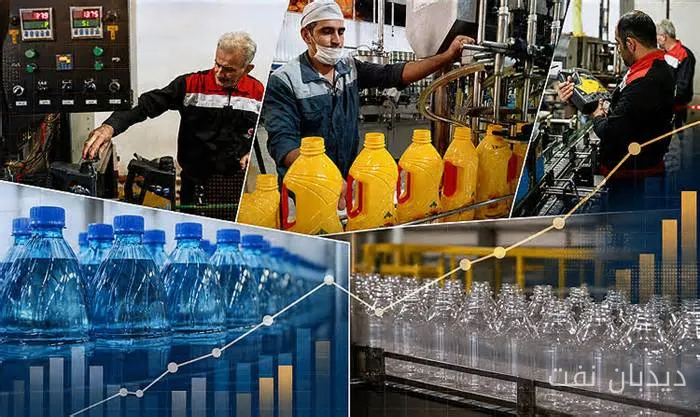
Processing industries are currently under a triple pressure that has sharply increased production costs while limiting the maneuverability of businesses. An unprecedented surge in the prices of packaging materials, including metal cans, plastic, and cardboard, alongside frequent energy constraints and a severe liquidity shortage, has created conditions where many production units operate at significantly lower capacities than their nominal capabilities. According to reports from the Statistical Center, the year-on-year inflation rate for producers in industries related to chemicals, plastics, and paper has reached figures between 120% and 160% this spring.
Impact of Rising Costs on Production
This increase directly affects the final price of processed products, including petrochemical, food, and agricultural materials, minimizing the profit margins of units. Producers say that the price of cans and packaging plastic has multiplied compared to last year, and securing working capital for purchasing these raw materials has become one of their biggest daily challenges.
Read more: Vice President: The 80,000 Tomans gasoline plan is not on the agenda
Energy Constraints and Their Effects
Energy constraints have also imposed additional pressure on these industries. Many processing units that require continuous heating and cooling processes face gas pressure drops or power outages during different seasons of the year. These disruptions not only reduce production but also increase maintenance costs for equipment and waste of raw materials. The liquidity shortage is the third ring of this pressure. Delays in collecting receivables from the distribution network, banks' strictness in granting loans, and rising financing costs have made it difficult for many medium and small enterprises to secure raw materials on time or fulfill their export commitments.
The result of these conditions has been a reduction in operational capacity, workforce adjustments, and in some cases, temporary halts in production lines. Stakeholders in the processing industries warn that if these three factors are not simultaneously controlled, not only will domestic food security be affected, but also the export opportunities for this sector will gradually be lost.
Amir Yousefi, Vice President of the Food Industries Commission of the Iran Chamber, pointed out the rising production costs in the food industry, stating: Recent fluctuations in exchange rates have increased the cost of raw materials used in packaging, and alongside that, some packaging items have also faced supply constraints. Since part of the raw materials for these items depends on imports and foreign purchases, changes in exchange rates quickly reflect on production costs.
Yousefi added: A producer can compensate for rising costs from their profit margin up to a certain point, but when production costs exceed this level, continuing operations at previous prices becomes impossible, and part of the cost increase inevitably gets transferred to the product price. He also referred to the damages caused by electricity fluctuations, stating: The damage from power outages and fluctuations is not limited to halting the production line. Power fluctuations can damage the equipment and components of production units, creating additional costs for businesses.
Yousefi further mentioned the difficulties in securing financing, stating: Access to banking facilities for production units has become more difficult, and the cost of financing has also significantly increased. Banks are stricter in granting or renewing loans. Meanwhile, food industries need continuous working capital to secure raw materials and maintain production flow.
Saeed Torkman, an active figure in the petrochemical and polymer sector, also reported a decrease in the supply of raw materials for processing industries in the commodity exchange, stating: Since the beginning of the year, there has been an average reduction of about 30% in the supply and trading of petrochemical materials. This reduction has also impacted production levels, leading to a 30% decrease in production in this sector compared to the same period last year.
Torkman added: The rising prices of raw materials have led to reduced consumption in processing industries, and these challenges could have serious repercussions on production and employment in this sector. If serious decisions are not made to alleviate the existing pressures on businesses, the continued operation of many units will face even greater difficulties.
Read more: Jalilvand: Stagnant cases will be organized and resolved · Dell with $60.9 billion in AI server orders, can it create sustainable liquidity?