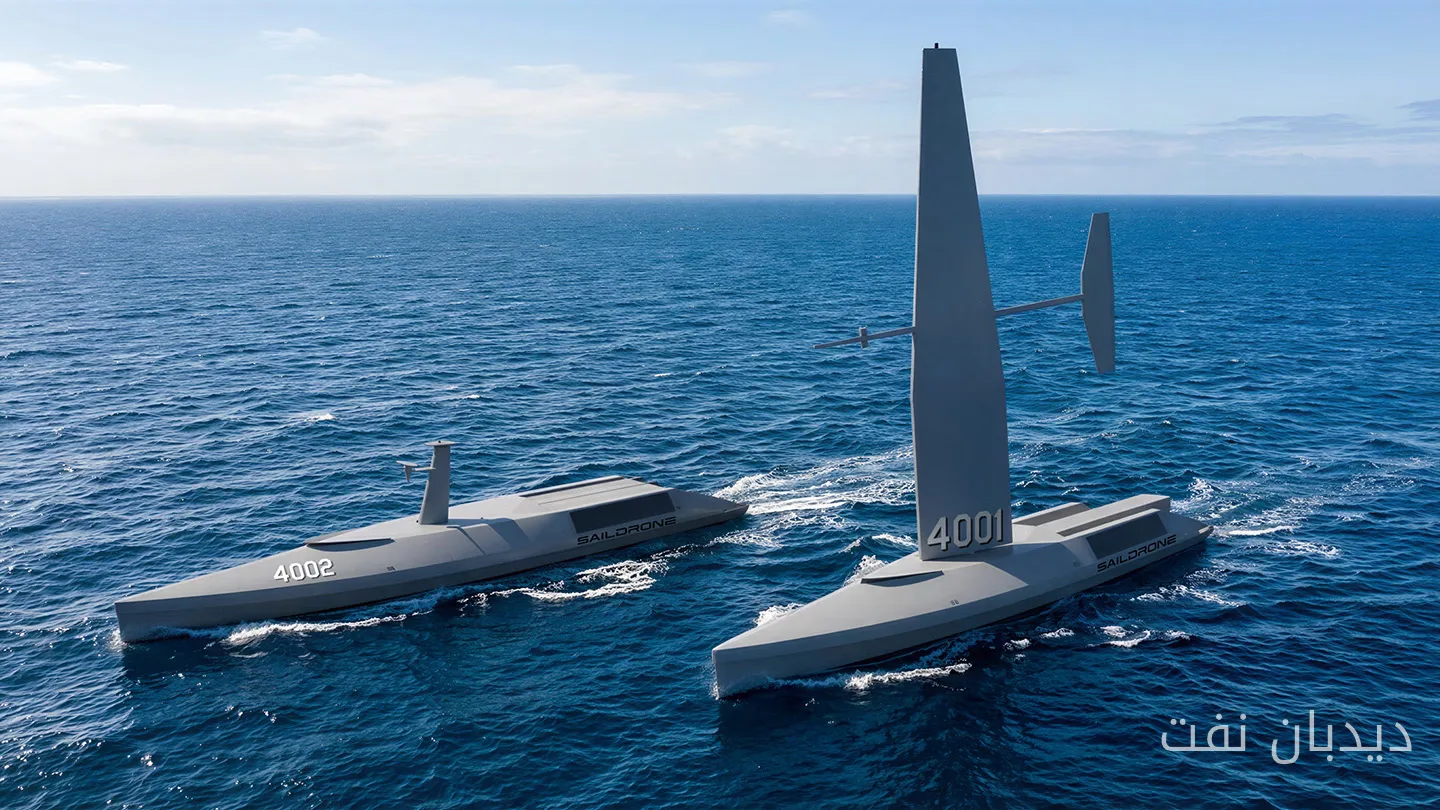
Saildrone, a manufacturer of unmanned surface vehicles, won in court and was able to challenge the U.S. Navy's new procurement program. This program, introduced by the Pentagon to expedite the procurement process, is recognized as a rare example of a supplier's success against the government.
Details of the Legal Challenge
The legal challenge stemmed from the Navy's competitive program to develop a new type of Medium Unmanned Surface Vehicle (MUSV). The Navy has increasingly developed and utilized these types of drones, and the new program aims to create a class of medium vehicles.
The Pentagon is seeking to modernize and expedite the procurement process. However, last summer, issues were reported in selecting suppliers, describing the process as "chaotic from the start." In September, the Navy announced that initial orders for 10 vehicles had been awarded to Galliano Marine Services, HII, and Saronic Technologies after successful sea trials.
Court Ruling and Implications
Saildrone filed a lawsuit after the Navy rejected the company's entry due to non-compliance with three evaluation criteria. The company argued that it had been incorrectly deemed non-compliant. After the challenge was presented, two of the three rejected determinations were overturned, but the third remained as a rejection criterion.
U.S. Federal Judge Philip S. Haji agreed with Saildrone's position, stating that the Navy had "engaged in discriminatory behavior in reviewing Saildrone's proposal" and had acted "arbitrarily and irrationally." The judge also overturned the Navy's decision to exclude Saildrone from the competition.
The court determined that Saildrone had been unlawfully excluded and ordered the Navy to promptly reevaluate the company's proposal using the same criteria applied to other competitors. Until this is done, the Navy cannot allocate more than $1.5 billion of the $2.1 billion program budget to production.
This victory for Saildrone is seen not only as a success in this competition but also as a sign of the potential for small suppliers to challenge the government. The company's attorneys from Selendy Gay, who represented Saildrone, emphasized that this decision has implications beyond a specific competition.
George Stanton, founder and CEO of Saildrone, regarded this ruling as a victory for fair competition and national security. However, he added that "the future of naval warfare will be at sea, not in court. We are eager to move beyond this legal dispute and focus all our efforts on delivering advanced maritime automation for the U.S. Navy."
Despite Saildrone's victory, the judge deemed the Navy's decision regarding Blue Water Autonomy as "reasonable," and the company's appeal was denied.
Read more: Resumption of Peace Talks Between Ukraine and Russia Led by Steve Witkoff in Abu Dhabi · New Restrictions by the U.S. Navy for Incoming Ships from Somali Ports