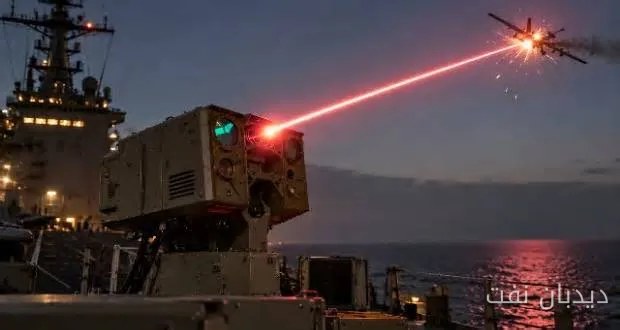
The United States is expanding the use of advanced laser weapons to counter Iranian aerial threats in the Strait of Hormuz. This action is aimed at countering drones and cruise missiles from the Islamic Republic of Iran. According to reports, the U.S. military has spent about $500 million on the development and procurement of laser systems.
Advantages of Laser Weapons
Laser weapons have attracted more attention due to their lower cost per shot compared to expensive interceptor missiles. These weapons can effectively counter aerial threats such as drones and cruise missiles, making them a more cost-effective option for the military.
Read more: Construction of a $3 billion shipbuilding port in Brownsville by Saronic has begun
The technology for laser weapons in the United States has a history of several decades, but due to various technical challenges, these systems have not yet reached operational use. However, recent advancements in energy production and targeting systems have created conditions for the operational use of these weapons.
Development and Investment in Laser Weapons
The development of laser systems has prompted the U.S. military to increase its investments. Advances in technologies related to laser weapons, including improvements in energy production, heat management, and targeting systems, have made the operational use of these weapons more feasible. These advancements allow the military to identify and track aerial targets with greater accuracy, thereby increasing the effectiveness of these systems in combat conditions.
Ultimately, given the ongoing threats from Iran in the region and the increase in military activities, the use of laser weapons could be considered one of the effective solutions for U.S. air defense against Iranian threats in the Strait of Hormuz.
Read more: Mitsubishi invests $635 million to expand shipbuilding capacity · The United States has deployed the USS Theodore Roosevelt and 10,000 troops to the Persian Gulf