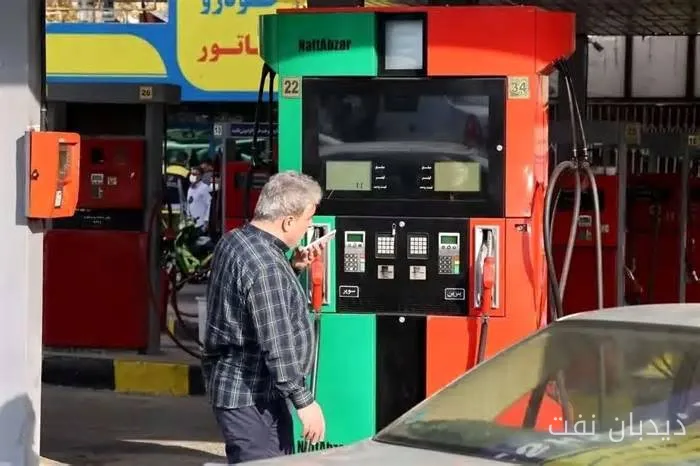
The plan to identify free fuel station cards for authentication and monitoring gasoline consumption has started at the beginning of 1405. Mohammad Sadegh Azimi Far, CEO of the National Iranian Oil Products Distribution Company, explained that with this plan, the authority of free cards will be taken from station owners and given to individuals. This means that individuals must be authenticated when they visit the stations.
Details of the Authentication Plan
Authentication will be done using a bank card and national ID code. In this process, the Mana system will be utilized to determine who has received fuel and to collect information regarding the fuel consumption of each household. Currently, this plan is being tested at one or two stations in Tehran and is expected to be rapidly extended to other parts of the country.
Read more: Zodiac Maritime signed a $500 million contract with Hanwha to build an LNG Carrier
Targeting Reduction in Consumption and Combating Smuggling
The aim of implementing this plan is to reduce fuel smuggling and prevent the misuse of fuel cards. According to estimates, the volume of fuel smuggling within the country reaches about 4 to 5 million liters per day. Groups in some areas of the country are taking gasoline out of the official cycle and selling it at higher prices. Meanwhile, some are transferring gasoline to industries and replacing it with industrial solvents.
With the identification of fuel cards, it is expected that off-network gasoline consumption will decrease. If this plan succeeds in halving off-network consumption, it would mean a reduction of 2.5 million liters of gasoline consumption per day. This reduction could have a positive impact on the current imbalance in the country's fuel market.
Fueling Process and Authentication at Stations
The process of identifying fuel cards works such that when using a free card, the individual must obtain a code before starting to refuel. At this stage, an inquiry is made from the national ID of the bank account holder. This inquiry is essential for collecting data related to the fuel consumption of each household. Additionally, a fee of one thousand tomans is charged from the banking network for this inquiry.
Another point is that with the follow-ups conducted, vehicle ownership has been linked to the national ID of all household members. Therefore, households that do not own a vehicle will not have the ability to refuel using the free cards at the stations. Ultimately, it seems that the main goal of this plan is to collect data related to gasoline consumption and prevent the misuse of fuel cards.



