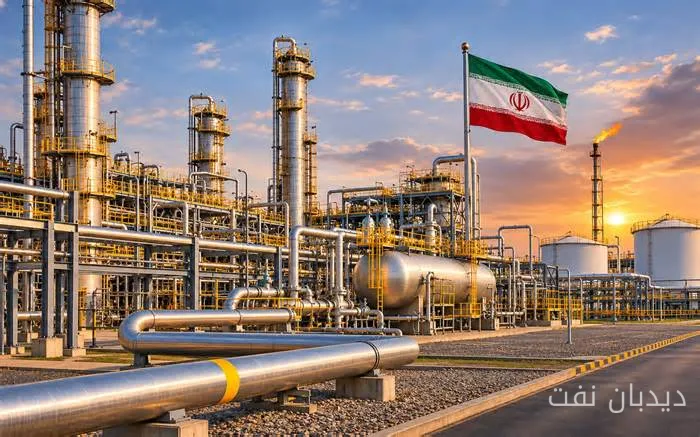
The Ministry of Oil has taken steps to reduce the waste of national resources by increasing the volume of associated and flare gas collection. This gas, which is a significant part of the country's energy resources, can be converted into feedstock for industries and a source of income if collected and processed. However, until now, part of this capital was being burned in oil fields, which not only wastes national resources but also has environmental consequences.
Daily Collection of 17 Million Cubic Meters of Gas
According to announced statistics, the volume of associated and flare gas collection in the oil industry has surpassed 17 million cubic meters per day. This statistic, along with the development of processing infrastructure and increased private sector participation, is highlighted as one of the achievements of the Ministry of Oil's program in the area of flare gas mitigation. The Dehloran Petro-Refinery (NGL3100) with an investment of about 1.1 billion euros and a daily processing capacity of 240 million cubic feet of gas is considered one of the important projects in this area.
Read more: Navy: The violating oil tanker had an accident east of the Strait of Hormuz
Private Sector Participation in Flare Gas Collection
The Ministry of Oil is also seeking to utilize the investment and executive capabilities of the private sector for the collection of associated gas. According to the statistics of the National Iranian South Oil Company, various work packages have been defined for the collection of flare gas, of which 6 packages have been commissioned, 17 packages are in progress, and 4 packages are in the transfer stage. The collection capacity of gas in the commissioned packages is reported to be 78 million cubic feet per day, and upon completion of all packages, the daily collection capacity of 504 million cubic feet of gas will be achieved.
Iran is among the largest countries with flare gas, and according to global reports, the issue of burning associated gas has become a serious challenge for the country's oil industry. Therefore, there is a necessity for transparent and comparable statistics on the trend of flare gas reduction. The Ministry of Oil should publish detailed statistics on the volume of produced associated gas, the amount of gas collected, and the number of extinguished flares to provide a clear picture of the performance of this program.
Ultimately, collecting associated gas not only helps reduce pollution but also serves as a solution to prevent the waste of energy resources and provide feedstock for downstream industries. The final criterion for evaluating these actions is the actual reduction of gas flaring and the conversion of wasted gas into economic wealth.
Read more: Navy Command: 11 oil tankers burned in the Strait of Hormuz over 9 days · Hamid Bord appointed as caretaker of the Ministry of Oil of Iran