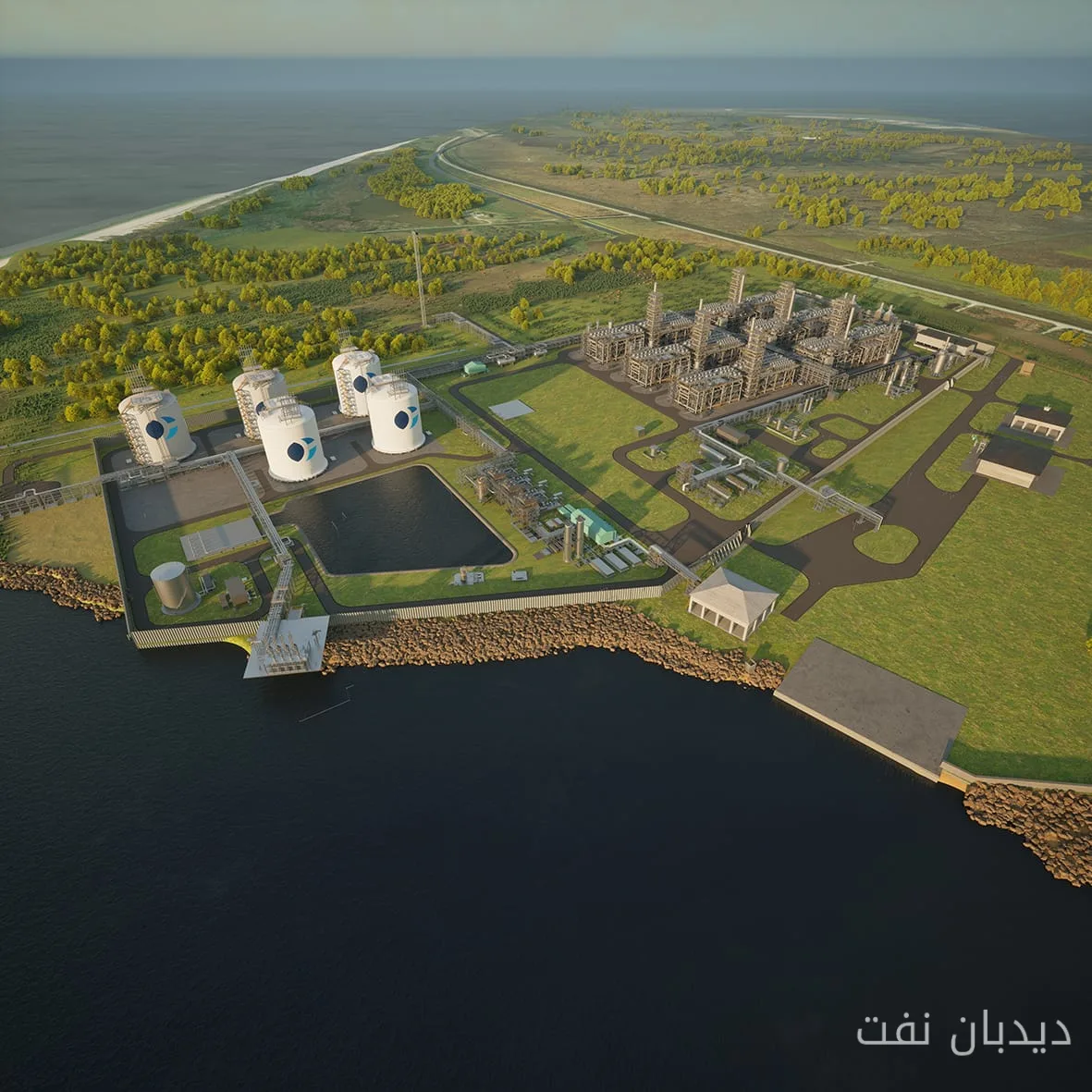
Technip Energies, as an engineering company based in France, has taken on the responsibility of managing the project and overseeing the development of a liquefied natural gas (LNG) export terminal in Guaymas, Sonora, located on the western coast of Mexico.
Details of the LNG Project in Guaymas
The company has announced that it will play a key role in the overall project management, engineering interface management, construction management, and independent oversight of the project. Technip Energies will act as the technical partner and primary integrator among stakeholders, contractors, and project executing entities.
Read more: Damage to the East-West Pipeline in Saudi Arabia Affects the Country's Oil Exports
Floating Processing Units
This role as project management consultant (ePMC) includes liquefied natural gas facilities with a capacity of 6 million tons per year, which consists of two floating processing units: a pre-treatment unit and a liquefaction unit. The company will have overall oversight of both units and their integration.
This contract marks Technip Energies' first project with LNG Alliance and the second global ePMC contract for an FLNG development. The company has also recently initiated a $12.5 billion project for LNG facilities in Louisiana.
Amigo LNG Project
The Amigo LNG project includes oversight of related offshore facilities, which consist of a quadruple dock for receiving two LNG vessels and two floating storage units (FSUs). These facilities are designed to be capable of exporting up to 7.8 million tons per year of LNG. Following a 20-year sales and purchase agreement for this project with the Sahara group, Gunvor signed an agreement to purchase 0.85 million tons per year of LNG for 20 years, and International Resources similarly for 1 million tons per year for two decades.
Read more: Delegation of School Closure Authority to Education · Significant Growth of LNG in Shell's Plans; A Future Full of Gas!