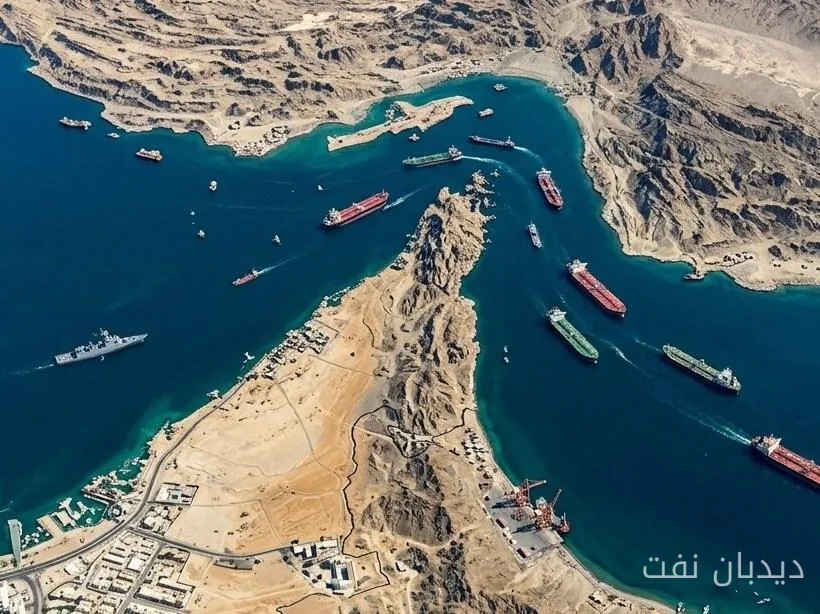
The Strait of Hormuz, as a strategic passage, has transported an average of 20.9 million barrels of oil and petroleum products daily in the first half of 2025. This volume is equivalent to one-fifth of global liquid petroleum consumption and nearly one-quarter of maritime oil trade. Additionally, over 20% of global liquefied natural gas trade is also dependent on this route. These figures indicate that the Strait of Hormuz is not merely a regional passage but one of the key points of the global economy, where any disruption could raise energy costs for consumers worldwide.
America's Dependence on Gulf Oil
America's direct dependence on oil passing through Hormuz is more limited than that of some Asian economies, but this reality does not mean the U.S. economy is immune. According to data from the U.S. Energy Information Administration (EIA), in the first half of 2025, U.S. imports of crude oil and condensates from Gulf countries passing through this strait were about 400,000 barrels per day. This figure accounts for about 2% of the country’s liquid petroleum consumption. However, oil is priced on the global market, and disruptions in Gulf supply can also affect gasoline, diesel, and transportation costs in the U.S.
Read more: Sanctioning the Iranian tanker shipment on the way to Chinese ports
Continuing Effects of Disruption in the Strait of Hormuz
Reports indicate that despite Middle Eastern oil exports approaching pre-war levels, Brent oil prices remain above $100 per barrel. This clearly shows that merely returning supply volumes is not enough to alleviate market concerns and energy costs. The claim of America's self-sufficiency from the Strait of Hormuz is more an attempt to downplay the consequences of disruption in this waterway than a reflection of actual immunity. The U.S. can source part of its needs from domestic production or other suppliers, but it cannot easily detach itself from the effects of global oil prices on its economy.
Especially since rising fuel prices directly pressure household costs, transportation, and the prices of goods. Therefore, the strategic importance of the Strait of Hormuz for Iran is not limited to the volume of oil that passes through it; this strait is at the intersection of regional security and the global economy, and any sustained crisis there will have costs beyond the region. Data do not support the claim of U.S. immunity; rather, they show that even an economy with less direct dependence is not safe from the repercussions of disruption in one of the world's most vital energy arteries.
Read more: France seizes the DF Peak tanker in the Indian Ocean · Increase in Iraq's oil exports to 2 million and 700 thousand barrels



