The manager of the Smart Fuel System of the National Iranian Oil Products Distribution Company, Abbas Basafa, announced that the deduction of extra amounts from bank cards at fuel stations has no connection with the Ministry of Oil or this company, and all collected funds are allocated to the operating bank.
Details of the Deduction and Use of Emergency Cards
Currently, between 40 to 45 percent of fuel transactions in the country are conducted using emergency cards. Basafa noted that nearly 100 percent of off-network supply is also done through this method, indicating the strategic importance of managing this sector. Therefore, to organize the situation and implement the identification plan, the system requires individual authentication. In this context, when swiping a bank card, an amount of 1,000 tomans is deducted for inquiry and authentication services based on the national ID.
Read more: Minister of Oil: South Pars gas capacity will be revived by December
Infrastructure Costs and Existing Challenges
Basafa explained that in the banking system, the approved tariff for such services varies from 1,000 to 5,000 tomans, and through negotiations, this figure has been reduced to the minimum possible, which is 1,000 tomans. The continuity of services at fuel stations in the country requires advanced hardware and software equipment. The price of each card reader ranges from 40 to 50 million tomans, and to achieve nationwide coverage, at least 30,000 devices are necessary. The maintenance costs of this network are also very high, with the cost of paper supply reaching 500 billion tomans last year.
The funds received for inquiries are spent on the 24-hour support cycle of the operating bank to ensure that in case of technical failure, equipment returns to service as quickly as possible, preventing station outages. However, one of the challenges of implementing the plan was the method of communication and the selection of the payment mechanism. In the initial trial phases, the "prepayment" method or "voucher" was considered, which faced numerous problems for citizens. Therefore, the current mechanism was chosen to address people's concerns and prevent long delays at stations.
How to Follow Up and Obtain a Duplicate Fuel Card
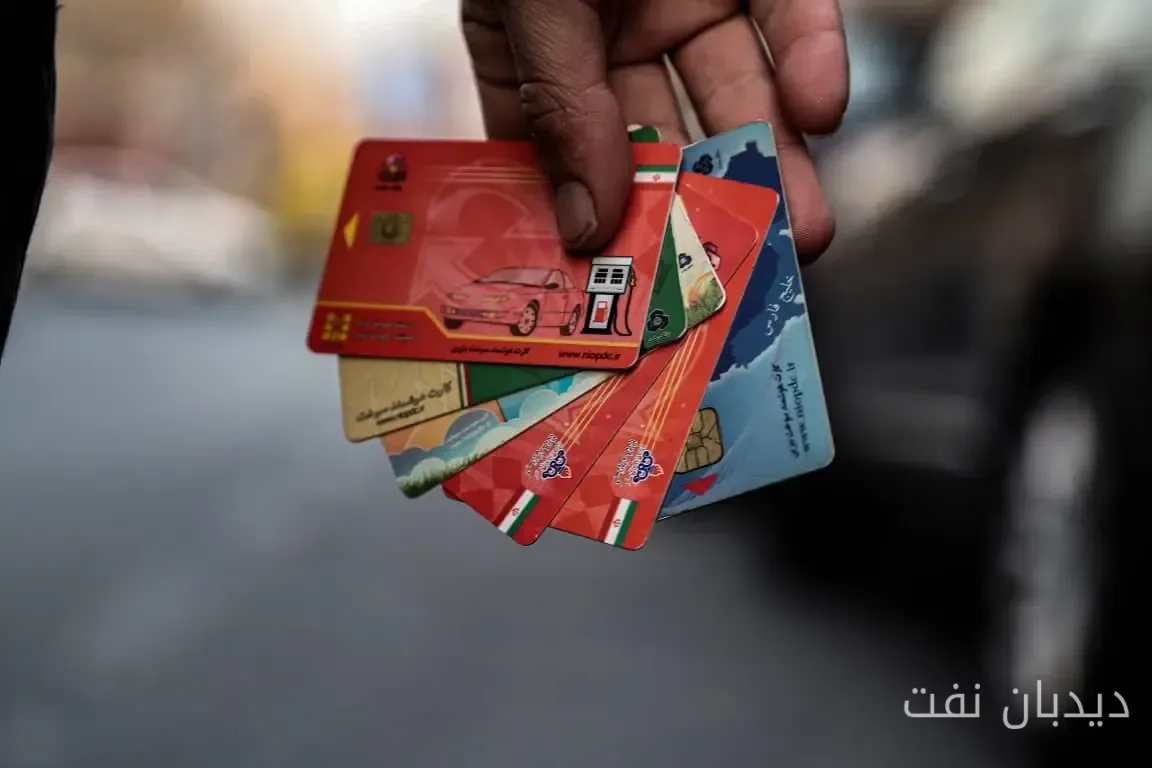
Lost personal fuel cards or leaving them at fuel supply stations are among the concerns that drivers face challenges such as resorting to emergency cards at the station or going through the time-consuming process of obtaining a duplicate card. When a citizen leaves their fuel card at a station, the station operators are obliged to keep it for a specified period so that the owner can retrieve it in person. If the station attendant refuses to return the card, citizens can follow up through the response system and file a complaint.
Individuals who do not know the exact location where they left their card can visit the dedicated system and select the option "Cards Left at the Station" to find out the latest status of their card. For this inquiry, entering the PAN number or the vehicle's VIN is sufficient. If the card cannot be recovered this way, the applicant will have to go through the process of obtaining a duplicate card.
Read more: CMB.TECH has achieved the sale of another Suezmax tanker · Sanction on the cargo of the tanker "Iran" on its way to Chinese ports