MOL (Mitsui O.S.K. Lines) has signed a contract with Deutsche ReGas to establish a floating storage and regasification unit (FSRU) in Germany. This agreement has been made to enhance local and regional energy security in Germany.
Contract Details
Under this contract, MOL has signed a long-term lease agreement for the deployment of an FSRU unit at the Deutsche Ostsee LNG terminal in Mukran, Germany. For this project, an LNG tanker will be converted into an FSRU unit at the Hudong-Zhonghua shipyard in China and is expected to be operational by 2028.
Read more: 20-year contract between QatarEnergy and Woodside for LNG supply from Louisiana
Importance of the Project for Energy Security
Jutaro Tamura, President and CEO of MOL, described this project as a strategic milestone for the company and highlighted the importance of this collaboration with Deutsche ReGas in the energy infrastructure sector. He added that this project will strengthen MOL's position as a global LNG infrastructure provider and will help address Germany's and Europe's energy import challenges.
This project is recognized as the first FSRU conversion project independently developed by MOL, aiming to supply LNG for the main gas networks in Europe. Surin Viraia-Simonovich, Executive Director of MOL, described this project as a significant achievement for the Europe and Africa region and emphasized MOL's commitment to developing critical energy infrastructure that supports Europe's changing energy needs.
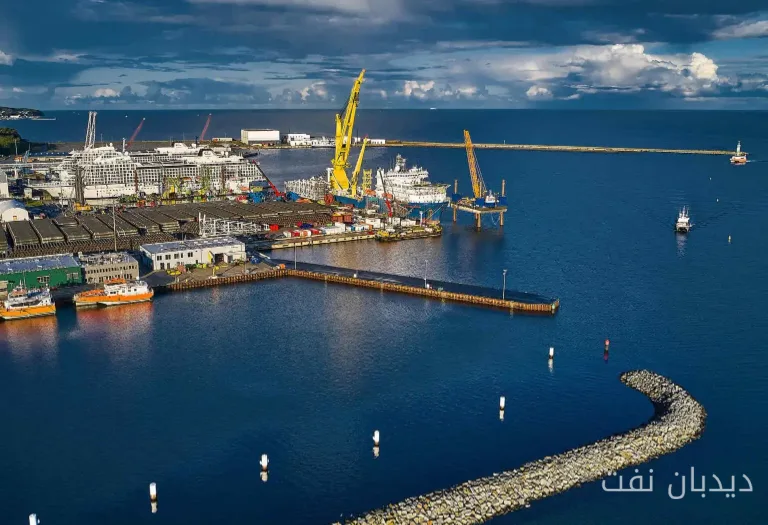
The contract signing ceremony took place on October 29 in Tokyo, attended by figures such as Ingo Wagner, CEO of Deutsche ReGas, and Jutaro Tamura. The Deutsche Ostsee LNG terminal, located on the shores of the Baltic Sea in Germany, is recognized as a key resource in diversifying gas supply sources for Germany and Europe.
Wagner also emphasized the importance of collaborating with MOL as a key player in LNG infrastructure, stressing that by restoring the full capacity of this terminal, energy supply security can be enhanced and greater flexibility for imports can be created, benefiting consumers, industry, and energy markets.
Project officials also highlighted the advantages of FSRUs over traditional LNG terminals. FSRUs typically have shorter development times and lower investment requirements, providing flexible and scalable infrastructure solutions. Leveraging its expertise and experience in LNG transportation, MOL is developing this project and contributing to providing a reliable and flexible import solution for the gas markets in Germany and Europe.
Read more: Russia will begin annual maritime transport along the Northern Sea Route in early 2027 · FERC has proposed a new plan to facilitate the permitting of LNG projects