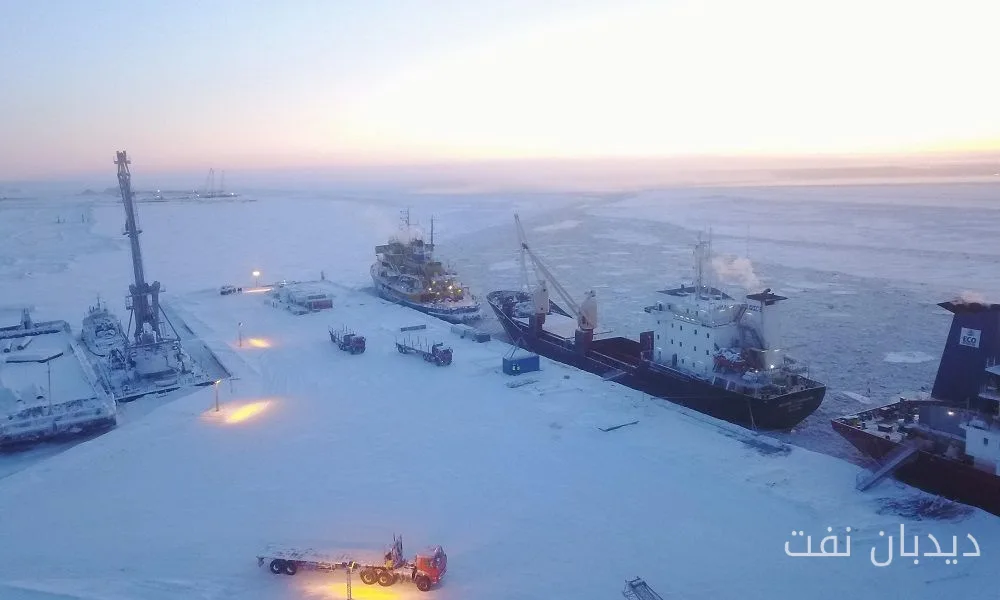
Russia plans to launch annual maritime transport eastward along the Northern Sea Route (NSR) starting in early 2027. This decision has been made due to increased traffic in this northern passage and ongoing disruptions in traditional transport routes.
Preparation for Winter Voyages
Vladimir Panov, head of the Arctic division of Rosatom, announced that preparations for regular winter voyages to Asia are nearing completion. One of Russia's largest cargo exporters expects to begin its annual shipments from early next year. The name of this company has not been disclosed, but Panov pointed to increased exports from Novatek's liquefied natural gas operations and Rosneft's Vostok oil project, which has completed six shipments so far.
Read more: Saipem signed multi-million dollar drilling contracts with Eni in the Mediterranean and West Africa
Development of the Nuclear Icebreaker Fleet
This expansion will be supported by additional capacity from nuclear icebreakers. Russia expects to commission the Chukotka icebreaker early next year, which will increase its operational nuclear icebreaker fleet to nine vessels. Two polar-class liquefied natural gas carriers have also been delivered from the Zvezda shipbuilding plant.
This announcement comes as this year has set records for the NSR. Rosatom states that the total cargo volume has exceeded 37.2 million tons from last year and is about 20 percent ahead of the same period in 2025. The total transport volume for the year is expected to exceed 40 million tons.
Panov predicted that the volume of transit cargo this year will nearly double, reaching over 7 million tons. Additionally, container voyages will also double from 23 to 46 trips.
Most of this growth is attributed to tanker activity. Russian oil exports through the Arctic reached about 20 million barrels between July and mid-October, nearly 50 percent higher than last year's seasonal total.
However, annual navigation still faces specific technical challenges. Panov acknowledged that the speed of convoys needs to be increased and that further investment in emergency response, communications, and medical infrastructure is essential.
The increased use of one of the planet's most sensitive environmental waterways has raised growing concerns. Dr. Sian Prior, senior advisor to the Clean Arctic Coalition, warned that the growing maritime commercial activities will bring "increased climatic impacts, more pollution, and reduced biodiversity."
This NGO is concerned about black carbon emissions from ships burning fossil fuels. These particles, when settled on snow and ice, contribute to melting ice by reducing the amount of sunlight reflected from the surface.
Read more: Finalizing the gas trade agreement between Iran and Russia in Moscow · Tanker carrying a shipment of Iranian oil identified in a route to evade sanctions