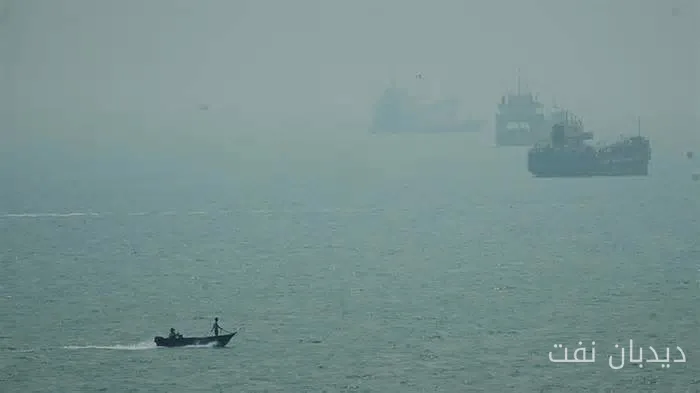
Saudi Arabia has changed its oil export route to the US-led corridor in the Strait of Hormuz due to repeated Iranian attacks on oil facilities and energy shipments. This route change has been made to counter disruptions caused by the war and to maintain oil export levels.
Recent Developments in the Oil Market
Nearly seven months into the war, global oil prices have significantly increased. Nevertheless, analysts believe that overall oil supply is still sufficient to meet global demand. Saudi Arabia and other oil-producing countries in the Gulf have quickly sought alternative routes and utilized the spare capacity of their pipelines. Thus, despite the problems caused by Iranian attacks, oil exports from these countries have continued.
Read more: PTTEP and Valeura Energy make final investment decision for Bussabong gas field development
New Routes and Existing Challenges
To prevent disruptions in oil exports, Saudi Arabia has utilized its East-to-West pipeline, which transports oil to the port of Yanbu on the Red Sea coast. From there, tankers head towards Asia via the Bab-el-Mandeb Strait. Additionally, the United Arab Emirates has also used a pipeline that transports oil to Fujairah, thereby bypassing the Strait of Hormuz. However, these alternative routes are costly and time-consuming and may not be sustainable in the long term.
Moreover, with the Houthi attacks on Saudi oil shipments, new threats have emerged for export routes. In response to these threats, Saudi Arabia has redirected its oil shipments towards the northwest and the Mediterranean Sea, where tankers either pass through the Suez Canal or shipments are transferred to other tankers via a pipeline in Egypt. These changes are due to attacks on pipelines and export routes.
Nonetheless, despite the existing challenges, oil export flows from Kuwait, Iraq, and the UAE have increased once again. Recent data shows that on Monday, six supertankers loaded a total of 12 million barrels of oil at Saudi terminals in the Gulf. Analysts estimate that currently, about six to seven million barrels of oil are passing through the new routes daily.
The use of these alternative routes is not a permanent solution due to their high costs and time consumption. For example, transporting oil to Asia via the Suez Canal instead of the more direct Red Sea route can add up to a month to travel time. Meanwhile, the rising demand for supertankers has also significantly increased their rental costs.