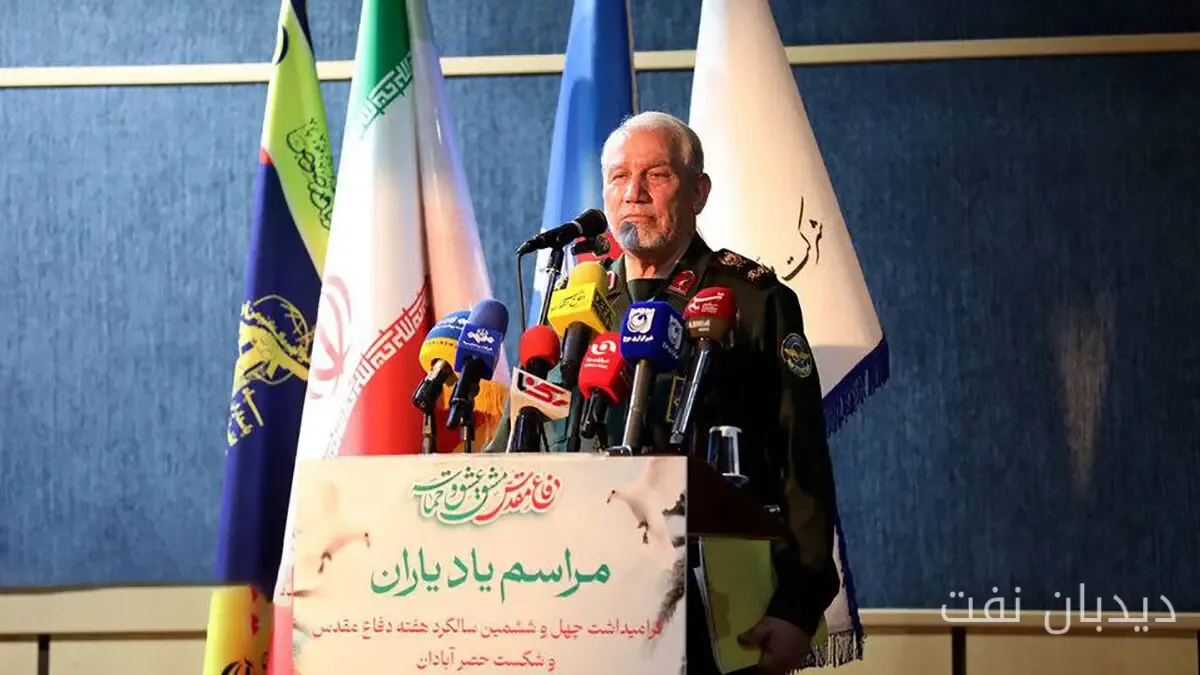
Major General Seyyed Yahya Rahim Safavi, assistant and senior advisor to the Commander-in-Chief, while appreciating the efforts of the staff, engineers, and managers of Iran's oil industry, examined the geopolitical position of energy and its impact on the equations of war. He noted the historical significance of the oil industry in Iran, stating: "The oil industry has been at the forefront of defending the country."
The Geopolitical Role of Energy
Rahim Safavi referred to Dwight Eisenhower's speech in 1952 and emphasized Iran's importance as a country with oil resources and a strategic geographical position. He said: "From a geopolitical perspective, Iran holds special significance due to its geographical position, energy resources, and its role in regional equations."
Read more: U.S. Diesel Export Restrictions by Trump and Their Consequences for Europe
He also pointed out that energy is not just an economic commodity, but a source of power, a tool of pressure, and an indicator of the resilience of nations. Safavi added: "Any disruption in the energy flow of the Persian Gulf can have consequences beyond the borders of the regional countries."
Epic Moments of the Oil Industry
Safavi emphasized the historic role of the oil industry in Iran, referring to three significant epic moments. He identified the first epic as the strikes of oil industry workers in 1979, which weakened the Pahlavi regime. The second epic occurred during the eight years of the Sacred Defense, which included the preservation of the Abadan refinery and the continuation of oil production in critical conditions.
Referring to the current situation, he described the third epic of the oil industry as being in the economic war and the current crisis, stating: "Today, oil industry workers are at the forefront, and the continuation of production, refining, and selling oil is vital for Iran's economy."
The Strait of Hormuz and National Security
Rahim Safavi examined the position of the Strait of Hormuz, stating: "Intelligent management of this passage can influence the energy equations of the region and the world." He emphasized that any change in the status of oil tanker traffic and energy transfer from this region will lead to changes in global energy markets.
He also stressed the necessity of energy conservation in the current conditions, saying: "A nation in wartime must adapt itself to the existing conditions, and all sectors of society must participate in energy consumption management."
In conclusion, Safavi referred to Iran's neighboring capacities for energy trade development and emphasized the importance of cooperation among regional countries to create sustainable security. He expressed hope that Iran and its neighboring countries could utilize their internal capacities and achieve lasting peace and progress.
Read more: General Safavi: The Strait of Hormuz Can Be Iran's Leverage for Victory in War · Iran and U.S. Negotiations at an Impasse and Trump's Rejection of Tehran's Proposal



