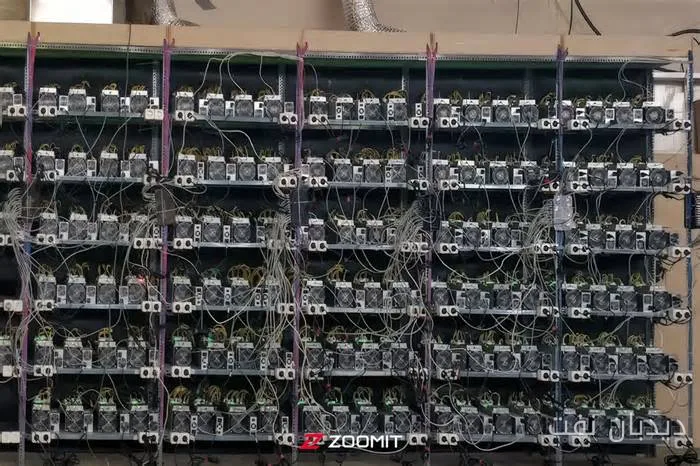
The Parliament Research Center has assessed the power consumption of cryptocurrency mining in Iran to be between 930 to 1200 megawatts. According to the calculations made, this amount of consumption accounts for about 6% of the total electricity imbalance in the country during the four hot months of the year and is equivalent to 14% of the monthly energy deficit during peak summer.
Electricity Imbalance and the Impact of Cryptocurrency Mining
In January 2025, after a nationwide internet outage, the base load of the network decreased by about 927 megawatts between 3 to 5 AM. This drop in load was partly due to the reduced activity of data centers and online infrastructures. Investigations by the Parliament Research Center show that the monthly consumption of cryptocurrency mining reaches about 700 million kilowatt-hours.
Read more: Report by the Parliament Research Center on Energy Imbalance in Iran
Considering the 5 billion kilowatt-hour electricity deficit in the hot months, completely eliminating cryptocurrency mining operations could increase the share of hours without outages from 5.2% to 33.6% and help reduce the frequency of voltage drops.
Financial Burden and Energy Supply
Providing the energy required for miners through thermal power plants requires about 8.46 billion kilowatt-hours of electricity and 2.1 billion cubic meters of gas or 2 billion liters of diesel. Taking into account the cost of imported diesel at a minimum rate of 70 cents per liter, the annual financial burden of mining fuel reaches 1.5 billion dollars, which does not include industrial damages.
Cryptocurrency mining in the residential sector is economically unjustifiable due to high tariff steps, but it is profitable in industrial, agricultural, and commercial sectors. The electricity production and distribution management (Tavanir) has identified 2500 megawatts of unauthorized consumption and estimates that an equivalent amount remains unidentified.
Read more: Ukrainian Drone Forces Commander Reports 300 Ships Deactivated · Peak Electricity Consumption in Yazd Province Reached 1124 Megawatts