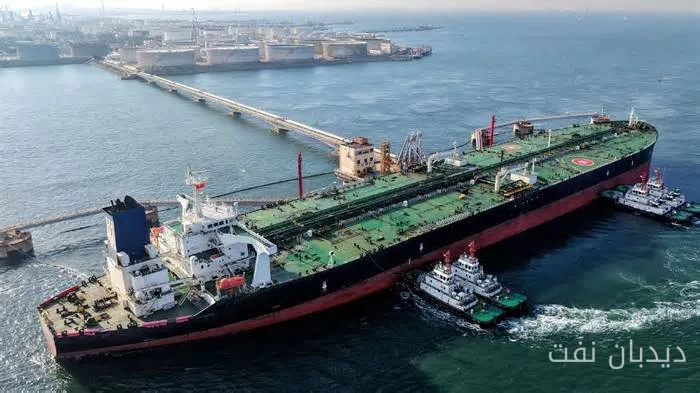
Crude oil exports from major Middle Eastern producers were reported at 12.8 million barrels per day in September, the highest level since the start of the U.S. and Israel's war against Iran in February. The increase in oil exports from Saudi Arabia and the UAE has been identified as the main factors behind this growth.
Increase in Exports from the Strait of Hormuz
This increase coincided with the improvement of oil exports through the Strait of Hormuz, and it is estimated that oil exports from this route reached about 7.4 million barrels per day in September. Preliminary data indicates that Saudi Arabia has shifted part of its oil exports from the Yanbu port in the Red Sea to the Strait of Hormuz following attacks on its east-to-west pipeline.
Read more: Iran Stressed Its Position on the Strait of Hormuz
Analysis of Oil Exports
Despite the increase in exports from regional countries including Saudi Arabia, the UAE, Iraq, Oman, Qatar, Kuwait, and Iran, the volume of exports remains about 6 million barrels per day lower than the level in February. In February, exports from this region reached 18.8 million barrels per day.
Saudi Arabia, as the largest oil exporter in the region, had about 5.4 million barrels per day in oil exports in September, showing more than a twofold increase compared to 2.5 million barrels per day recorded in August. Oil exports from the Ras Tanura port in Saudi Arabia also reached about 3.6 million barrels per day in September, a significant increase compared to 929,000 barrels per day in August.
Kepler data also shows that last week, 19 very large oil tankers carrying Saudi oil passed through the Strait of Hormuz. Each of these tankers carried about 2 million barrels of oil, totaling approximately 38 million barrels of Saudi oil. This figure does not include ships that may have turned off their automatic identification system transmitters to avoid detection.
Before the war with Iran began on February 28, about 125 large commercial vessels, including oil tankers, gas carriers, bulk carriers, and container ships, passed through the Strait of Hormuz daily. At that time, this strait was the route for about 20 percent of the world's daily supply of crude oil and liquefied natural gas.
Read more: Facilitation of 22 Million Barrels of Oil Passage through the Strait of Hormuz Amid Sanctions · New Shipment of Iranian Tanker Under Sanctions on Route to the Persian Gulf



