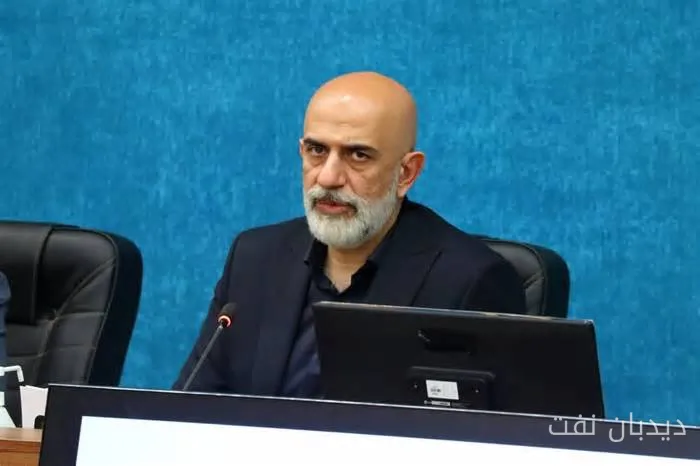
Kourosh Khosravi, during a meeting of the Economic Headquarters and Economic Table of Isfahan Province, pointed out the heavy consequences of energy imbalance on production and employment, stating: In managing consumption and facing gas imbalance, it should not be acted in a way that the main burden of shortages directly and before any other sector weighs heavily on the production sector; rather, household consumption management and pattern reform through cultural promotion should be prioritized so that the economy of the province does not come to a halt. Therefore, imposing restrictions in sectors such as greenhouses is the last line of defense before the household sector.
Emphasis on Time and Investment
He highlighted the sensitivity of the time factor in attracting and retaining investment, adding: With negative responses and keeping investors waiting in areas such as gas connections due to potential restrictions in the coming years, only time is lost; if we obstruct developmental projects today, we will face challenges for the province's future development. We should not allow an investor who has entered the field with motivation to be halted behind barriers of restrictions and uncertainty; rather, the responsible agencies are obliged to provide constructive responses to pave the way for the initiation and construction of projects.
Read more: Mohammad Hossein Memarian: The status of oil revenues is heavily dependent on siege
The Necessity of Developing Renewable Energies
The Deputy Coordinator of Economic Affairs of Isfahan Province criticized the delegation of resolving surplus capacities to bilateral agreements between industries, stating: Referring units that have an urgent need for energy to units with surplus and unused capacity in hopes of "bilateral agreements" does not lead anywhere in practice, and such follow-ups often reach a dead end; therefore, it is necessary for the responsible agencies to intervene and utilize their authorities and governance tools to develop a legal framework so that these idle capacities can be equitably and effectively made available to requesting units.
Khosravi considered the development of renewable energies as one of the most reliable sustainable solutions to address imbalance and noted: Maximizing the use of solar capacity is a very suitable basis for sustainable energy supply, and good actions and plans have been proposed in this regard, but alongside that, the capacity of organizations, media, and community capabilities must actively and operationally engage in cultural promotion to alleviate some of the pressure of imbalance on the industry.
He emphasized: Given the share of the household sector in energy consumption, moving towards first-type users is an unavoidable necessity that will be realized through cultural promotion and cooperation from the people.
Read more: Establishing a carbon-neutral framework by the Trump administration at the UN meeting · Nasrollah Pezeshkian: Issuing prior certification for users in gas consumption management



