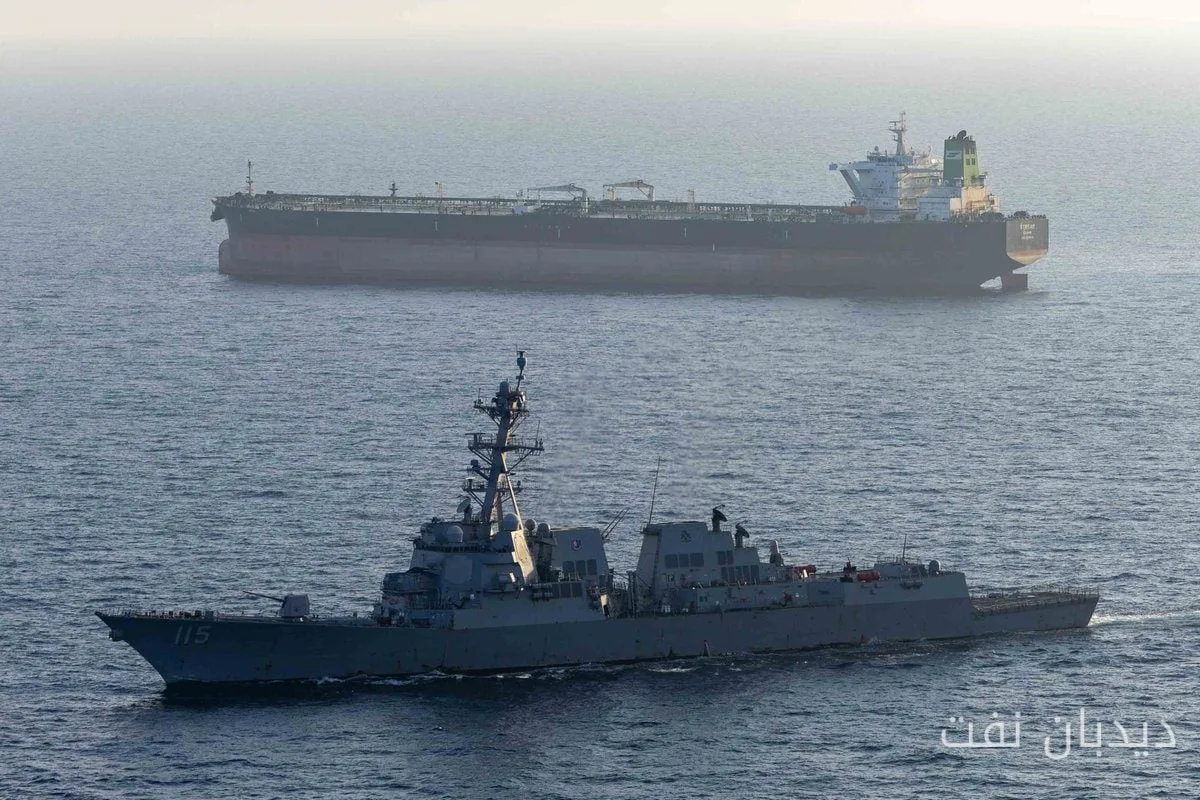
Iran's oil exports have reached zero, and no oil tanker has docked at Khark Island, the main loading point for the country's oil, in recent weeks. This situation reflects the increasing pressure that U.S. maritime sanctions have placed on Iran's oil industry.
Empty Status of Khark Island
According to ship tracking data and satellite images, no oil tanker has loaded at Khark Island since late August. This is the longest period of inactivity at this island since the start of the Iran-U.S. war in February. Khark Island manages almost all of Iran's crude oil exports, and currently, no oil vessels are seen at this island.
Read more: Havila Shipping Signs New Contracts for Operations in the North Sea
Analyses show that Iran's crude oil exports have dropped from nearly 1 million barrels per day in July to nothing by mid-September. July loadings were mainly concentrated in the first half of the month when a ceasefire agreement temporarily eased U.S. sanctions. However, with the return of sanctions, no oil tanker has been able to leave the waters near Iran.
Economic Consequences and Rising Oil Prices
In the past year, Iran has exported nearly 650 million barrels of crude oil, most of which went to China. Now that Iranian oil has disappeared from global markets, Chinese refineries are turning to other oil sources and competing with other buyers for barrels and ships. This situation has led to rising oil prices and a historic record in shipping costs.
Alongside export restrictions, Iran has intensified its attacks on vessels passing through the Strait of Hormuz, which connects the Persian Gulf to open seas. In the first two weeks of October, 25 ships were targeted in attacks, compared to 18 incidents in total during September and 15 incidents in August.
Satellite images taken from the European Union's Sentinel 1 and 2 satellites show that no oil tanker is loading at Khark Island. Typically, loading a large oil tanker at Khark Island takes about 24 to 48 hours. On October 1, a small vessel appeared at this island, seemingly breaking a 40-day inactivity, but its identification as the chemical tanker Clavel indicates that this ship has only been moving between Iranian ports.
At the same time, at least two oil tankers were observed between September 12 and 15 at docks near the southeastern part of Khark Island, but these docks are only used for loading liquefied natural gas and sulfur, and are not related to crude oil exports.
Read more: $70 Million Investment by HAI Shipping in Building Two New Oil Tankers · Mohammad Reza Aref: Iran's Sovereignty Over the Strait of Hormuz is Essential for Security



