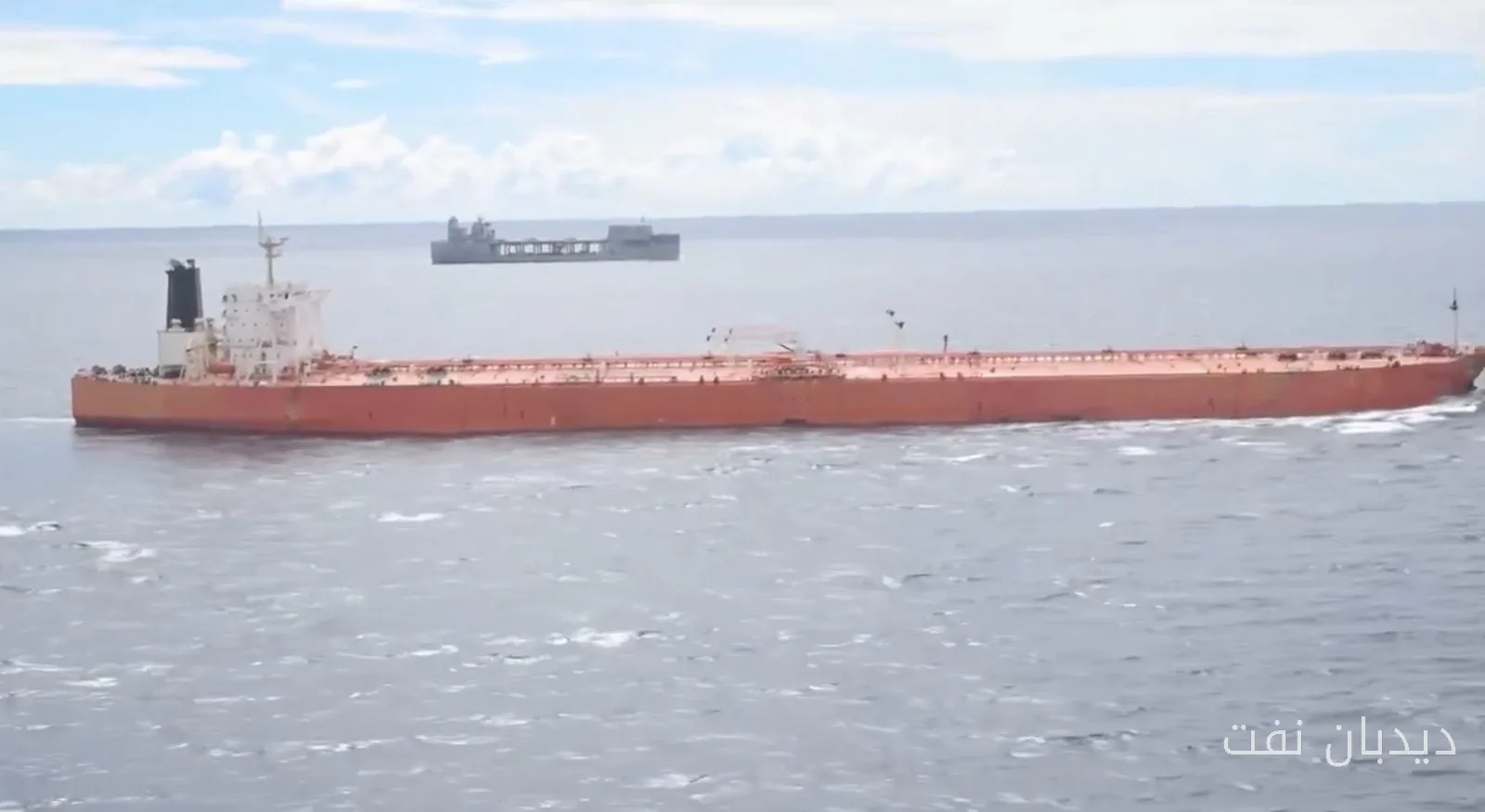
The Iranian tankers Tifani and Majestic X, which were seized by the United States Navy during the mid-war between the U.S. and Iran, are approaching the shores of the United States. These two tankers, along with a cargo valued at approximately $600 million, are heading towards America. This movement indicates unusual developments in the flow of Iranian oil exports, which have been severely restricted for decades due to sanctions.
Seizure of the Tankers and Their Cargo
These two tankers were seized in April 2023 in the Indian Ocean. Tifani and Majestic X, which are informally known as Phonix, have changed their course in recent weeks near the shores of Brazil. Maritime information indicates that these tankers are moving slowly at a speed of about 8 to 9 knots, while the typical speed for large tankers is around 12 to 13 knots.
Read more: SLB Signed Major Contracts with Aramco for Over 450 Oil Wells
Legal and Economic Consequences
In April, the U.S. Department of Justice initiated the process to confiscate these tankers. According to the Department of Homeland Security, law enforcement officials have taken action to enforce federal orders to seize the tankers and the approximately 4 million barrels of oil they were carrying. A third tanker, known as Lenore and Davina, was seized in June 2023 in the Indian Ocean.
Very Large Crude Carriers (VLCC) can simultaneously carry 2 million barrels of oil, making the total value of their cargo approximately $600 million. These developments reflect U.S. efforts to limit Iranian oil exports and reduce the country's revenues. The U.S. government hopes that by confiscating these tankers and their cargo, it can exert more pressure on Iran.
History of Sanctions and Their Impacts
On April 12, 2023, the United States announced a naval blockade against Iran to limit the flow of oil exports from the country and reduce its revenues. These sanctions have been imposed to achieve an agreement to end the conflicts with Iran. In previous instances, the Trump administration attempted to sell seized tankers and cargo to profit from them. These actions have faced challenges in the past, and in some cases, tanker owners have taken steps to prevent their sale.
Additionally, the U.S. Department of Justice is working to introduce a maritime judicial system to seize Iranian tankers as war spoils. These developments indicate the United States' determination to limit Iran's investments in the oil industry and challenge the country's behavior on a global scale.
Read more: Explosion at Abadan Oil Refinery; Gasoline Production Reduced to 8 Million Barrels per Day · Mohammad Hossein Memarian: The Status of Oil Revenues is Severely Dependent on the Blockade



