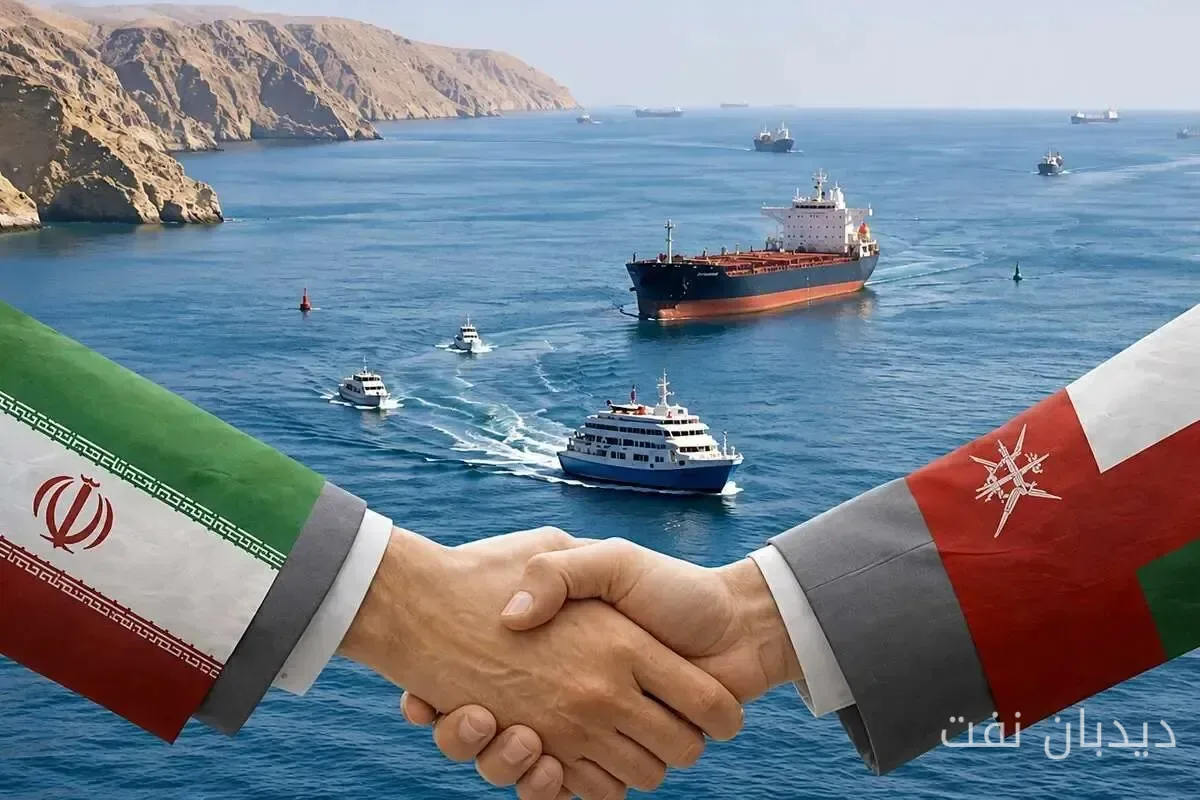
A new agreement between Iran and Oman regarding the establishment of arrangements and new routes for maritime traffic in the Strait of Hormuz has been signed. Seyyed Abbas Araghchi, Iran's Foreign Minister, announced the finalization of this agreement following technical and diplomatic discussions with Muscat, stating that details will be explained in a meeting attended by the Gulf Coast countries and Iraq.
Details of the Agreement and New Maritime Route
Araghchi explained that the main subject of this agreement is the design and determination of a new maritime route for the entry and exit of vessels from the Strait of Hormuz. Maps for this route have been prepared, and a joint statement between Iran and Oman has been drafted. This set will be sent to other countries in the region for registration within the framework of the International Maritime Organization (IMO) mechanisms.
Read more: Achievements of the trip of the security manager of the Morvarid Petrochemical Company and its costs
Araghchi also emphasized that this agreement does not mean the opening of the Strait of Hormuz, but rather provides a framework for maritime traffic in case the strait is reopened for shipping.
The Role of Oman and the Importance of the Agreement
This bilateral agreement between Iran and Oman, due to Oman's geographical position adjacent to the Strait of Hormuz, requires coordination between the two countries. Discussions between Iran and Oman have continued at technical and diplomatic levels in recent months, culminating in a final agreement in early September.
Iran and Oman are set to explain the details of the agreement in a meeting with the Gulf Coast countries and Iraq. Araghchi stressed that this meeting should not be seen as a multilateral negotiation for decision-making regarding the agreement, but rather that other countries have been invited to learn about the details and the manner of traffic on the new routes.
This agreement is of great importance to Iran, as the selection of routes, a significant portion of which lies in Iran's territorial waters, signifies an increase in Iran's role and sovereignty over the manner of traffic in the Strait of Hormuz.
Delay in the Meeting and Its Consequences
Badr al-Busaidi, Oman’s Foreign Minister, announced that the date of the regional meeting scheduled to be held in Salalah has been postponed. He stated that the purpose of this delay is to ensure the achievement of the agreement. This meeting is considered a confidence-building measure among the countries in the region and could pave the way for future discussions on various regional issues.
Ultimately, the Iran-Oman agreement regarding the new route is viewed as a strategic action in controlling maritime traffic in the Strait of Hormuz. Iran believes that this agreement will significantly contribute to the country's sovereignty and maritime security.
Read more: Tanker War: Attack on Iranian Tanker M/T Riesco in the Sea of Oman · Maritime Tensions: The U.S. Acts More Calmly After Attacking the Iranian Tanker