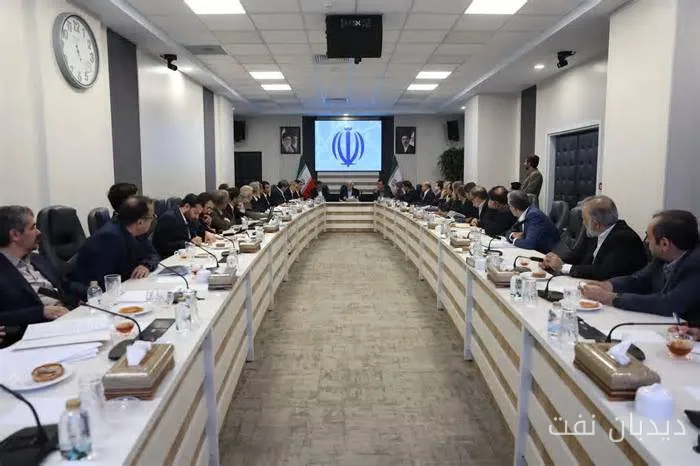
In the special technology development committee meeting chaired by the First Vice President, various proposals for the application of modern technologies in the oil and gas industry were reviewed. These proposals include 117 projects prepared in direct collaboration with 42 organizations and aim to enhance the resilience of the oil and gas industry, inter-agency coordination, support and facilitation for the private sector, prioritization of projects emphasized in higher-level documents, development of dual-use technologies, and penetration and development of the application of driving technologies.
Goals and Priorities of Technological Projects
One of the key objectives of these projects is to increase daily oil production by at least 250,000 barrels by providing modern drilling fleets and related services and equipment for the operation of oil wells. Additionally, the target is to increase crude oil production by at least 250,000 barrels per day. These projects also aim to increase the country's foreign exchange revenues by $5 billion, enhance the productivity of oil fields, and diversify and apply new production technologies.
Read more: Sanctions on Tankers in the Strait of Hormuz Pressure Iran's Oil
Maintaining the production of over 700 million cubic meters of gas from South Pars in the pressure enhancement project is another goal of these projects. In this regard, various contracts have been signed to begin the design and development of various turbines and the construction, installation, and commissioning of downhole and surface compressors, and their implementation has begun. One of these projects, which is set to be inaugurated by the dawn of the Islamic Revolution, will employ the latest technologies for using pressure-enhancing turbines for offshore and onshore platforms; a technology that has previously been available to five countries.
Technological Advances and Increased Productivity
According to the presented program, by implementing these projects over 40 years, the equivalent of $500 billion in surplus gas production from the pressure enhancement project will be secured, and the sustainability of daily production of over 700 million cubic meters of gas from the South Pars field will be maintained. Additionally, maintaining the capacity of the electricity production network and gasoline produced from liquids, and preventing an increase in energy imbalance are other goals of these projects.
The implementation of surface natural gas storage projects and the organization of flares will also contribute to increasing gas supply by 8 billion cubic meters and supporting non-oil exports by $1 billion. In this context, for the first time in the country, through a contract, flare gases have been pre-sold after purification. Furthermore, the project to convert flare gas into value-added products has begun in collaboration with petrochemical industries and knowledge-based companies.
The First Vice President emphasized the necessity of using modern technologies in this meeting, stating: "There is sufficient capacity in the country to utilize modern technologies in various sectors, including the oil and gas industry." He also stressed the importance of energy conservation and the government's responsibilities in this regard.
Read more: The Resignation of Mohsen Paknejad and Its Impacts on Iran's Oil Industry · Management of 12-Day War Incidents Using 600 Firefighters in South Pars



